“this family needed help beyond what I’m trained for” (para 58)

This was a statement by made by the Acting VP in a human rights decision.

X by Y v. Board of Education of School District No. Z, 2024 BCHRT 72

[58]           Y asked the Acting VP in cross examination how the break from the classroom would have been restorative for X had it happened at home. The Acting VP replied that “Mom knows best”, noting that X was “totally dysregulated”, placed in a challenging classroom, and needed space. The Acting VP said that X spoke a lot about his Dad during this time, and how he missed him. He observed, “this family needed help beyond what I’m trained for.”

This has me asking…

What are educational staff trained for?

AND

When professionals, such as occupational therapists (OT), psychologists, or speech-language pathologists, make recommendations, why are some parents having issues with getting these recommendations placed in their child’s Individual Education Plan (IEP)?

The kinds of education that teachers have for disabilities vary greatly and in my opinion, extremely lacking. Huge gaps. They hold similar beliefs and biases as the general public. I have learned the hard way that some teachers have zero training in this area. There are educational staff who have, on their own, focused their professional development in this area and are extremely valuable. There is a huge sliding scale of knowledge and skill between educators and administrators.

We already know that the human rights code supersedes classroom teacher autonomy.

So above all, they need to provide an equitable education. If they are ignoring or refusing to implement professional recommendations, aren’t they taking a HUGE risk?

If by ignoring professional recommendations, the child isn’t able to access their education equitably and there is harm that occurs, I’d be filing a human rights complaint.

It has been quite a SHOCKING discovery to me, just how little education staff know about disabilities. Especially invisible ones. Some people are very knowledgeable. However, the number of people working in education who have little to zero knowledge is stunning. And scary. And makes complete sense how so many children experience real trauma at school, and so many are being homeschooled unable to return to school.

Here is a report compiled by Jenn Scharf titled Stories of Exclusion 2021. These are a collection of 60 stories told by parents.

I don’t think our education system is fair.

To anyone.

Everyone is being set up to fail. My heart goes out to the educational staff expected to create magic and miracles with such a scarce system. But, if you are ignoring professional recommendations and putting your own personal perspective in its place when you lack such training and expertise, I have no sympathy for you.

I do have sympathy for the child who may be harmed by your willful ignorance. I have sympathy for the family who will now be put in the position of continued advocacy, yet again, and may be considering filing a human rights complaint so their child can get an education.

Is the education system struggling with the concept of inclusion, or is it struggling because not enough people have the knowledge and skills to make it work?

And then add the impacts of scarcity in education

And then add ableism.

AAAAAHHHH ok…. now this all makes sense.

This is why we are all struggling.

This is systemic. Multi-dimensional systemic issues.

And if someone who is reading this thinks…. well they are now starting to have a class on the topic of disabilities in universities, isn’t that something?

It clearly isn’t enough.

Clearly.

Edit: A parent on my Facebook page commented after reading this blog “Not to mention a lot of the disability training they do get is outdated and ableist….” – Excellent point!!

Daycare Termination and Disability

RE: New Human Rights Case linked to daycare and termination of daycare services due to a perceived disability.

Mother obo Child v. Daycare, 2024 BCHRT 251

Since we all have most likely struggled with daycare issues at some point, I am posting this case.

It is a very interesting case. A situation that parents find themselves trapped in way too often.

The child hasn’t been diagnosed yet.

They suspect he might have ADHD/Autism. Their daycare terminated services.

The mother is self-representing.

This is a dismissal application.

She won.

Her case is continuing to a hearing/mediation meeting.

[1] In September 2020, at the age of two, the Child began attending the Daycare. On around October 22, 2020, the Daycare informed the Child’s parents that it would no longer provide childcare services to the Child. Services ended one month later, around November 20, 2020. The Mother brings this complaint on behalf of the Child. The complaint alleges the Daycare discriminated against the Child when it terminated its services because it perceived him to have a mental disability and because he is a Jehovah Witness, contrary to s. 8 of the Human Rights Code [Code] which prohibits discrimination in services.

[2] The Daycare denies discriminating. It states it terminated services to the Child in accordance with its “Childcare Discharge Policy” because the Daycare was unable to provide the Child with the level of care he required, and not for any reasons related to a real or perceived mental disability or to his religion. The Daycare also says that even if the Child’s perceived mental disability was a factor in the termination, it was justified in ending the childcare service it provided to the Child because the Child engaged in harmful and aggressive behaviour that put the safety of other children at risk. It asks the Tribunal for an order dismissing the complaint against it under s. 27(1)(c).

[3] The issues I must decide are:

a. whether there is no reasonable prospect the Child will succeed in proving the Daycare perceived him to have a disability and, if so, whether the perceived disability factored into the termination of services;

b. if so whether the Daycare is reasonably certain to prove it was justified in its decision to terminate services; and

c. whether there is no reasonable prospect the Child will succeed in proving his religion factored into the termination of services.

[4] For the following reasons, I deny the application. To make this decision, I have considered all the information filed by the parties. In these reasons, I only refer to what is necessary to explain my decision. I make no findings of fact.

We also have another case where the teenager was bullied due to sexual orientation and he won his case, even though he is heterosexual. It didn’t matter. He was treated and bullied as if he belonged to the protected group.
Jubran v. Board of Trustees, 2002 BCHRT 10 (CanLII)
Here is a summary of key highlights.

These two cases are examples of a perceived disability/protected ground. There is room here for these to be used in an argument in an educational setting. Whether the tribunal will accept it or not is another question.


Here is the full decision with all of the details.

https://www.bchrt.bc.ca/…/decisions/recent/2024-bchrt-251/

Let’s Talk about Hindsight!

Hindsight and Meaningful Inquiry

Want to get the school moving on providing your child supports?

Remove their hindsight defence and trigger the duty to accommodate.

Why does the school want a defence at all? To avoid a finding of discrimination if a parent was to ever bring their case to a hearing at the BC Human Rights Tribunal.

If they know we could be successful at a human rights tribunal hearing, they will be much more motivated to provide your child the supports they need NOW. This is because they want to reduce the damage period. They are always focused on reducing the scope of your complaint and minimizing the harm.

Removing their hindsight defence and triggering meaningful inquiry is key for our children.

This decision explains what the hindsight defence is.


Student by Parent v. School District BCHRT 237


[99]           Next, in B v. School District, 2019 BCHRT 170, the evidence supported that the school district provided the child with the recommended supports and accommodations. The Tribunal found that it was “only with hindsight” that it was possible to say that the child could have benefited from more support: para. 81. It dismissed the complaint in part because there was insufficient evidence to demonstrate that the school district reasonably ought to have known that the child required more: para. 98. In contrast here, I have found that the District had sufficient information to trigger some kind of inquiry or response beyond asking the Student how she was doing and, assuming the counsellor did this, advising of available supports.

They may claim, “We didn’t know.” If they didn’t know your child needed more support or ought to have known they needed more support, they will escape responsibility. When they are aware, they must investigate.

So you know what that means.

Parent(s)/guardians need to be VERY communicative with the school and tell them that:

  1. Tell them your child is struggling.
  2. Tell them your child’s struggle is connected to school.
  3. Explain how your child is struggling.
    • Are they crying at home?
    • Are they refusing to attend?
    • Are they melting down after school?
    • Do you have examples of homework or school work to show them as evidence?
  4. Explain how their struggle is connected to their disability.

So, we need to start this off in an email. We need to document it.

Whether they respond to the emails we send is another blog. But we need to build evidence that they were VERY aware, in case they think they can claim they didn’t know. It’s amazing how the defence of “oh we didn’t know, oh I was confused, oh I think we had a misunderstanding, I didn’t realize that…”. We need to be so crystal clear that we don’t give them any wiggle room to say “we didn’t know”.

Human Rights Decisions – Education

There are two human rights decisions that, when put together, are powerful. Both parents self-represented themselves at the BC Human Rights Tribunal.

They must investigate when we tell them our child is struggling. – Meaningful inquiry.

Student by Parent v. School District BCHRT 237

[100]      In short, I agree with the District that the Parent and Student were obliged to bring forward information relating to accommodation. The Parent did that, when she communicated that the Student had anxiety and trichotillomania and that school was taking a significant toll on her physical and mental health. That information should have been enough to prompt a meaningful inquiry by the school to identify what was triggering the Student’s symptoms and what supports or accommodations may be appropriate to ensure she was able to meaningfully and equitably access her education. The failure to take that step was, in my view, not reasonable. As a result, the disability-related impacts on the Student, arising from conditions in her Language 10 class between April 24 and June 27, 2019, have not been justified and violate s. 8 of the Human Rights Code.

[104]      In sum, I have found that the conditions in the Student’s grade 8 Language 10 class exacerbated the Student’s anxiety and trichotillomania, and that the District failed to take reasonable steps to investigate and address those conditions during the period between April 24, 2019, and June 27, 2019 (the last day of school). I find this is a violation of s. 8 of the Human Rights Code, and warrants a remedy, which I address below.

They aren’t allowed to give up when things aren’t working well. They must review and adapt their approaches.

X by Y v. Board of Education of School District No. Z, 2024 BCHRT 72

[120] Ultimately, on a balance of probabilities, I am satisfied that the District discharged its duty to accommodate X in his grade 2 year by reviewing the Diagnosis Report, developing an IEP, making various support people and strategies available that were incorporated into the classroom and outside, reviewing progress and changes, and adapting its approach in response……

Meaningful Inquiry – Duty to Accommodate

By communicating that our child is struggling, we will trigger MEANINGFUL INQUIRY. You are triggering the duty to accommodate.

It is very

very

very

very important that we are communicating with them. This is how we block a hindsight defence.

Schools are increasingly not wanting to put communication in emails, and instead, they want phone calls or meetings. They may say that it is easier to resolve issues through communicating in person/phone. That may be true. But it is not lost on us that it also doesn’t create any documentation.

But that doesn’t stop us from sending emails to create a paper trail and document what is happening. You can create a summary of the minute and put in the email, “Please let me know if I have misunderstood anything or if you need to clarify anything I have written.”

So send those emails. cc: the main people responsible. Principals and LSS teachers for IEP implementation. Each person you cc: in an email could be a potential witness in a hearing.

Just keep sending those emails and create that paper trail. Communicating is part of the collaboration process in the duty to accommodate. So, you are just fulfilling your responsibility in the process.

Any diagnosis you have received from a doctor, even if it didn’t come from a psychoeducational assessment, I suggest you have the doctor write a letter and ask the school to put it in your child’s file. Also, you may want to ask them how this is going to be communicated out to the staff, so they are aware. Anything you can do to provide documentation on a diagnosis locks them into the duty to accommodate.

Blogs on Creating a Document Trail


Documentation
Improper Conduct – Hiding Disclosure – What documents to ask for
Why is Documentation so Important?
Evidence of Harm. Effective advocacy in Education
How to Gather Evidence

Blogs on How to Communicate with the School

Communication
What is the Ask? Email writing for School Advocacy
5 Rules on how to be Untouchable
The Use of Delay
Defamation. You Said What?
Liability in Education
Email Q & A
How to Gather Evidence
Strong Advocacy = Written Authority

Barriers! Barriers! Barriers!

When we discuss equity, accessibility the human rights code and accessibility legislation it is ALLLL about removing barriers.

Therefore when we advocate for our kids, any advocacy grounded in rights-based advocacy is going to focus on barriers.

1. Human Rights Code

In X by Y v. Board of Education of School District No. Z, 2024 BCHRT 72

Not all negative experiences are discrimination.

[110] ….I accept that these incidents which X relayed to Y were upsetting to X. I appreciate that the interactions may have fed into X’s general feelings of unease at school, but the fact alone that these events may have happened is not enough, in itself, to establish that X’s disability factored into them. Not all negative experiences are discrimination. Even accepting that these incidents occurred, I did not hear evidence that could establish, on a balance of probabilities, that X’s disability was a factor in the conduct of the adults involved in these interactions.

The test, is whether barriers have been reasonably removed.

[142] Y has said that the learning support provided throughout X’s education has not been enough for X to “reach the same level as his peers or possibly excel”. The District’s obligation is reasonable not perfect accommodation. As I have said above, reasonable accommodation is not necessarily measured by whether a student is meeting or exceeding certain standardized learning goals but rather by whether barriers have been removed to provide meaningful access to education.

2. Also, accessibility legislation THE ACCESSIBLE BC ACT

Barriers

2   (1)For the purposes of this Act, a barrier is anything that hinders the full and equal participation in society of a person with an impairment.

(2)For certainty and without limiting subsection (1), barriers can be

(a)caused by environments, attitudes, practices, policies, information, communications or technologies, and

(b)affected by intersecting forms of discrimination.

So…… what are barriers?


As outlined from the Onatario’s Unviersity Accessibility Campus (2017)  Here are 5 Barriers

Attitudinal Barriers – are behaviours, perceptions and assumptions that discriminate against persons with disabilities. These barriers often emerge from a lack of understanding, which can lead people to ignore, to judge, or have misconceptions about a person with a disability.

Organizational or systemic barriers are policies, procedures or practices that unfairly discriminate and can prevent individuals from participating fully in a situation. Organizational or systemic barriers are often put into place unintentionally.

Architectural or physical barriers are elements of buildings or outdoor spaces that create barriers to persons with disabilities. These barriers relate to elements such as the design of a building’s stairs or doorways, the layout of rooms, or the width of halls and sidewalks.

Information or communications barriers occur when sensory disabilities, such as hearing, seeing or learning disabilities, have not been considered. These barriers relate to both the sending and receiving of information.

Technological barriers occur when a device or technological platform is not accessible to its intended audience and cannot be used with an assistive device. Technology can enhance the user experience, but it can also create unintentional barriers for some users. Technological barriers are often related to information and communications barriers.

Communicating with the school

When communicating your communiation with the school it is the responsbility of the school to investigate what the barriers are. And to figure out how to remove them. Then they need to monitor, and adapt until the barriers are removed.

You need to express to the school your child is struggling and how they are struggling. Communiating what you are seeing and dealing with and what your concerns are, is key to trigger this inquiry.

Their investigation responsibilities is connected to “Meaningful Inquiry”.
Student (by Parent) v. School District, 2023 BCHRT 237
Summary of the Case with key highlights

[100]      In short, I agree with the District that the Parent and Student were obliged to bring forward information relating to accommodation. The Parent did that, when she communicated that the Student had anxiety and trichotillomania and that school was taking a significant toll on her physical and mental health. That information should have been enough to prompt a meaningful inquiry by the school to identify what was triggering the Student’s symptoms and what supports or accommodations may be appropriate to ensure she was able to meaningfully and equitably access her education. The failure to take that step was, in my view, not reasonable. As a result, the disability-related impacts on the Student, arising from conditions in her Language 10 class between April 24 and June 27, 2019, have not been justified and violate s. 8 of the Human Rights Code.

Their responsibility to monitor and adapt
Summary of Case with key highlights

[120] Ultimately, on a balance of probabilities, I am satisfied that the District discharged its duty to accommodate X in his grade 2 year by reviewing the Diagnosis Report, developing an IEP, making various support people and strategies available that were incorporated into the classroom and outside, reviewing progress and changes, and adapting its approach in response……

Accommodations are ramps, open doorways, open windows, bridges and all other symbolic connections you can think of that all mean the same thing. It’s a way to level the playing field and provide a child with the same opportunity as anyone else. To remove a barrier. To give someone a chance. To not create more obstacles in their path than anyone else.

NEW – OIPC Decision – Coquitlam School District

A New OIPC Decision was posted on April 15th involving the Coquitlam School District. Order F24-30

This is quite a unique decision involving a school district, compared with other decisions I have read. Particularly because I have never seen this section of the FIPPA used before. Section 14 – Solicitor-client privilege.

In some decisions involving all sorts of organizations, the respondents will suddenly be willing to disclose some of the previously withheld documents, only when the inquiry with the adjudicator starts. This is also the case here.

Do organizations just do that kind of stuff in hopes the applicant doesn’t have the stamina to last through these processes?

The summary by the OIPC is clear.

“An applicant made an access request and a privacy complaint to the Board of Education of School District No. 43 (School District) regarding a single email communication between the School District and an independent school. Initially, the School District withheld the email under s. 14 (solicitor-client privilege) of the Freedom of Information and Protection of Privacy Act (FIPPA) and disagreed with the applicant’s privacy complaint. However, during the inquiry, the School District determined that s. 14 did not apply and it disclosed the email to the applicant. It also acknowledged that it disclosed the applicant’s personal information without authority under FIPPA. The adjudicator determined that the issues in dispute were moot and there were no factors that warranted continuing the inquiry. Therefore, the adjudicator cancelled the inquiry.” (https://www.oipc.bc.ca/rulings/orders/)

What do you think of this?

Keep in mind, that this process takes years to wait for an inquiry. Years.

The school district was then paying lawyers to defend them through all of this.

When you think of it…. this parent’s tax dollars were going towards a school district that was paying lawyers to fight them over documents they should have had access to and their privacy was compromised.

Don’t we have school districts complaining of lack of funding?

When reading the details of this inquiry. It’s very interesting….

[11] The applicant’s child transferred from an Independent School to a school within the School District (Public School).

[12] In 2019, the applicant asked the principal of the Public School if any staff from the Public School and the Independent School had communicated about his child. The applicant and the principal exchanged several emails on the subject.

[13] In May 2021, legal counsel for the Independent School contacted the principal of the Public School to get information about whether the Independent School and the Public School had communicated about the applicant’s child. The Public School’s principal responded by email on May 12, 2021. In this email, the principal summarized his efforts to determine whether the communications took place and included a copy of the emails that he and the applicant exchanged in 2019.

[22] The parties agree that s. 14 does not apply to the information in dispute and the School District disclosed the email to the applicant.13 Given that all the information in dispute in this inquiry has been released to the applicant, I find that any order I make would not have a practical effect on the applicant’s right to access the information in dispute. As a result, I find that the issue of whether the School District is authorized to refuse the applicant access to the May 2021 email is moot.

Very interesting. I have so many questions.

[31] The parties agree that the 2021 email constituted a disclosure of the applicant’s personal information that was not authorized by FIPPA.17 The School District submits the unauthorized disclosure was quickly contained because the Independent School’s legal counsel recognized there may be privacy concerns about her receiving the email and immediately deleted it.18 The applicant does not challenge the veracity of the School District’s claim that the legal counsel immediately deleted the email in question.

So…if I am understanding this decision correctly.. lawyers from one school cannot contact another school and obtain information about a student/parents without the consent of the parent, even though they are lawyers?

Good to know.

As always, a big thank you to the parents who saw this through to hold the district accountable and provide us with an opportunity for learning and understanding the system. I am happy to see they had an outcome in their favour.

Ok parent(s)/guardians, keep this in mind for custody disputes, family court matters, human rights complaints, etc.

For anyone going through this process, the OIPC has a guide for completing written submissions. https://www.oipc.bc.ca/media/17752/2024-02-26-gd-instructions-for-written-inquiries.pdf

Human Rights Decision by Self-Representing Parent – They Can’t Give Up

I first have to start by saying, that I have SO much respect for a parent who is willing to bring their case to a completed hearing AND waited for their decision.

This is now the second parent I am aware of who is self-represented and their case decisions are only within a few months of each other.

If you are interested in the other case posted in December 2023
Student (by Parent) v. School District, 2023 BCHRT 237 

Reading through this case, it is extremely evident that this mother is a resilient person and a persistent advocate for her child, which takes so much bravery and strength. So much respect mama, so much. Thank you for taking your case to a hearing. We will all learn from your case and it will help other parents navigate their advocacy journeys on behalf of their children.

This case was dismissed, and discrimination was not found to meet the legal test. The school district was able to justify its actions on a balance of probabilities.

Through my lens, here are some important analyses of the case. However, I encourage everyone to read the case in full to truly understand the context of the case.

X by Y v. Board of Education of School District No. Z, 2024 BCHRT 72

Disability: ADHD and Dyslexia

[6] The burden is on Y to establish that X experienced adverse impacts in his education that are connected to his disabilities under s. 8 of the Code: Moore v. BC (Education), 2012 SCC 61 at para. 33. Once that is established, the burden shifts to the District to establish a justification defence. In this case, it is not disputed that X experienced disability-related adverse impacts. Therefore, the issues before me are whether the District has established that it reasonably accommodated X:

a. during grade 2, in relation to the adequacy of learning support?

b. during grade 3, in relation to the adequacy of learning support and in removing him from the classroom after the a behavioural incident?

c. during grade 4, in relation to the adequacy of learning support, consistency in Education Assistant support, and the implementation of the rewards program or “token economy”?

[108] It is also not disputed that X has disability-related challenges with self-regulation and academic learning. He often missed class, was consistently academically behind grade level, and experienced challenges interacting with teachers and peers. He was excluded from the classroom in grade 3 for a few days, and experienced distress over the possible addition or substitution of a new EA in grade 4.

[109] The crux of the complaint arises from the steps taken by the District in respect of these challenges, and whether it can justify its conduct in that regard.

[110] ….I accept that these incidents which X relayed to Y were upsetting to X. I appreciate that the interactions may have fed into X’s general feelings of unease at school, but the fact alone that these events may have happened is not enough, in itself, to establish that X’s disability factored into them. Not all negative experiences are discrimination. Even accepting that these incidents occurred, I did not hear evidence that could establish, on a balance of probabilities, that X’s disability was a factor in the conduct of the adults involved in these interactions.

[111] With it not disputed that X encountered disability-related barriers to his education, the burden shifts to the District to justify its actions. To justify the disability-related adverse impacts that X experienced, the District must prove that (1) they adopted the standard for a purpose rationally connected to the function being performed; (2) they adopted the standard in an honest and good faith belief that it was necessary to the fulfillment of that legitimate purpose; and (3) the standard was reasonably necessary in that it took all reasonable and practical steps to accommodate the Student: British Columbia (Superintendent of Motor Vehicles) v. British Columbia (Council of Human Rights), [1999] 3 SCR 868 [Grismer] at para. 20.

[112] Accommodation requires a reasonable, not a perfect solution: Central Okanagan School District No. 23 v. Renaud, [1992] 2 SCR 970 [Renaud]. While there may have been other approaches available to the District, this does not necessarily render the one taken unreasonable. What is reasonable and what constitutes undue hardship is fact specific and will turn on the specific circumstances of a particular case: Renaud.

[118] It was when X stopped taking medication for his ADHD around midway through the grade 2 year that he regressed in his behavioural challenges. On seeing that X was struggling with the small group setting for learning supports, the District pivoted to provide him with one on-one support. In other words, it continued to monitor and adapt based on X’s needs.

[120] Ultimately, on a balance of probabilities, I am satisfied that the District discharged its duty to accommodate X in his grade 2 year by reviewing the Diagnosis Report, developing an IEP, making various support people and strategies available that were incorporated into the classroom and outside, reviewing progress and changes, and adapting its approach in response……

[141] I acknowledge that X continued to struggle with not finding school a happy place to be and that a consequence of this has been persistent challenges for Y in getting X to attend. I acknowledge that X continues to not read at grade level. However, the District has not withdrawn, but rather has expanded, diversified, layered and adapted the accommodations it has had in place for X. In some aspects, these have “worked”, as they have allowed X to progress toward learning and behavioural goals, as Y herself acknowledged in her evidence. In others they have not, as X remains reluctant on some days to attend school at all. Y acknowledged at several points in her evidence that the District “threw everything at” the situation, giving layers of accommodations and adapting them to X’s needs.

[142] Y has said that the learning support provided throughout X’s education has not been enough for X to “reach the same level as his peers or possibly excel”. The District’s obligation is reasonable not perfect accommodation. As I have said above, reasonable accommodation is not necessarily measured by whether a student is meeting or exceeding certain standardized learning goals but rather by whether barriers have been removed to provide meaningful access to education.

[159] The District cannot control all social interactions between students and is not obligated to provide perfect accommodation. It is obligated to take all reasonable and practical steps to remove the disability-related barriers to X’s meaningful access to education. Insofar as X may have experienced some social friction with peers related to the token economy, I am satisfied on a balance of probabilities, that the token economy was part of a broader package of accommodation that was reasonable, and that the District took reasonable steps to address the social challenges X was experiencing.

[160] I acknowledge the ongoing challenges X is facing and appreciate that the steps taken by the District have not resolved them to the extent Y would hope. However, for the reasons set out above, I have found that the District has not breached the Code in its efforts to support X in accessing education.

[161] For the above reasons, the complaint is dismissed under s. 37(1) of the Code.

ADHD, Dyslexia, Dysgraphia – Human Rights Education Case

This is a new case that was posted on the BC Human Rights Tribunal Website March 26th, 2024. This is a timeliness application.

I have read through this case and I feel MANY families can relate to the details of this case or various aspects of this case.

It really deserves a full read, however I have pulled some paragraphs to summarize and give an overview. The analysis of this case by the tribunal member and their determination of whether disability was connected to the harm alleged is really important learning for us parents. It also describes how the tribunal interprets alleged inappropriate accommodations as potential discrimination.

I am also going to be emailing this case to the Ministry of Education and asking them to explain why they are not screening children in Kindergarten. Dyslexia BC has been advocating for this for years!

The Parent obo the Child v. School District, 2024 BCHRT 91

[8] The Child attended an elementary school in the School District from September 2015 until December 2020. He has dyslexia, dysgraphia, and attention deficit hyperactivity disorder [ADHD].

[9] By the third week of kindergarten in 2015, the Parent alleges that the Child began complaining of constant nausea and experienced diarrhea and vomiting regularly. She states he told her that he was scared to go to school as the work was too hard and he could not do it. The Parent alleges that the Child’s physical ailments were only present on school days and he began resisting going to school, to the extent that he cried all evening before going to school and lay on the floor crying two to three hours before school. The Parent alleges this same pattern persisted throughout the entire time the Child attended the school.

[14] Around August 2018, before the Child started grade three, the Parent alleges that she asked his teacher if he may be dyslexic. The Parent says that the teacher assured her that her son’s situation was normal, and he just needed to keep practicing. The Parent says that she thought that by raising the possibility dyslexia to the teacher it would prompt the teacher to investigate the issue more thoroughly. The Parent says that she ultimately decided to trust the teacher’s opinion, which resulted in the Child not being appropriately accommodated for his disabilities.

[15] In September 2018, the School District conducted a functional behavioral assessment of the Child. Based on the assessment, in November 2018 the School District placed him in a literacy intervention group. The Parent alleges the placement was an inappropriate response to the Child’s disabilities.

[17] In December 2018, the School District created its first Individual Educational Plan [IEP] for the Child. The plan focused on addressing the goals of the Child attending school and managing his anxiety in a positive way at school. It also addressed various ways to increase his reading and writing to advance him from operating at a grade one level. The Parent alleges the IEP did not appropriately address the Child’s disabilities.

[18] In June 2019, the Parent alleges the Child’s IEP was updated with minimal change. She says that worksheets provided by the school over the summer were too hard for the Child to complete. Once again, the Parent alleges the School District’s attempts to accommodate the Child’s disabilities were inappropriate.

[25] In mid 2020, at the end of grade four, the Parent says that she realized the extent of the Child’s reading struggles as he could not read instructions or complete any online school without her providing him with extensive one-to-one support. She alleges his reading skills were much lower than the School District had previously indicated. At that point the Parent says she began doing in-depth research on dyslexia and other disabilities pertaining to reading. She then decided to pay for him to attend tutoring with literacy specialists outside of school.

[31] ……...The Parent stated that she felt incredibly rushed during a less than one hour meeting about the plan for the Child related to the new information and the complexity of the situation. She worried about several educators being involved who did not have training for children with the Child’s learning disabilities and processing challenges.…..

[34] Finally, the Parent noted her concern that as of grade three the School District had already started to consider the Child as not being a candidate for graduation with a high school diploma.

[37] In January 2021, the Parent says that the Child was enrolled in a private school equipped to meet his education needs. She says that at the new school, the Child received 45 minutes of OG tutoring at the new school every day with positive effects. By the time her complaint was filed in November 2021, she described him as a “different child” who did not complain about going to school and did not get headaches and have an upset stomach or diarrhea. The Parent says the Child was learning at grade level and was now being given the opportunity to be successful.

[49] After reviewing the information on file, I have further determined that there is a succession of separate acts of discrimination of the same character that are separate contraventions of the Code extending back to the spring of 2016. I address each allegation in turn.

[50] The Complaint alleges that on April 4, 2016, the Parent emailed the Child’s kindergarten teacher with his reports that he felt rushed when doing work at school, and despite his best efforts he felt he was too slow in completing tasks. The Parent asked the teacher if there was anything that could be done about this problem. The teacher responded with an acknowledgement that the Child did take his time with his work and appears to suggest that the Parent should reassure the Child that he could take time and not be so hard on himself. From my review of this event, I am satisfied that the Complaint sets out an allegation of discrimination where the Child accessing educational services experienced harms because the School District failed to accommodate the Child and did not meet his educational needs by only telling the Parent to tell the Child not to not rush or be too hard on himself. The harm incurred 12 by taking this action only was the Child not receiving a proper education. I am further satisfied the Complaint sets out an allegation that the School District failed to make sufficient inquiries into the nature and extent of the Child’s disability-related needs in response to the Parent’s concerns. In my view, this inaction caused harm where the School District failed to discover Child’s learning disabilities such that he could then be provided with appropriate accommodations to prevent him falling behind. In my view, the Complaint alleges that the Child’s disability was a factor in the harms alleged.

[51] The Complaint alleges that in November 2016, the School District’s response to the Child’s reading difficulties was to send home alphabet cards and provide video links for him to work on sounding out letters and creating simple words. From my review of this event, I am satisfied that the Complaint sets out allegations of discrimination where the School District failed to accommodate the Child by addressing his learning disability needs in this manner. I am further satisfied the Complaint sets out an allegation that the School District failed to make sufficient inquiries into the nature and extent of the Child’s disability-related needs as opposed to sending home alphabet cards and video links to address his needs. In my view, the Complaint alleges that the Child’s disability was a factor in the harms alleged. In my view, the Complaint alleges that the Child’s disability was a factor in the harms alleged.

[52] The Complaint alleges that in the fall of 2017, the School District addressed the Child’s ongoing reading problems by giving him sight cards to take home and providing him with some one-on-one reading support. At this time, the Parent noted her concerns that the Child was merely memorizing the cards and not actually able to spell the words. She also observed that he was guessing words based on pictures. I am satisfied that the Complaint sets out allegations of discrimination where the School District failed to accommodate the Child by addressing his learning disability needs in this manner. I am further satisfied the Complaint sets out an allegation that the School District failed to make sufficient inquiries into the nature and extent of the Child’s disability-related needs as opposed to sending home sight cards and providing some one-on-one reading support. In my view, the Complaint alleges that the Child’s disability was a factor in the harms alleged. 13

[53] The Complaint alleges that in August 2018, the School District’s response to the Parent’s concern that the Child might be dyslexic as he continued to struggle in school was to assure her that he just needed to keep practicing. I am satisfied that the Complaint sets out allegations of discrimination where the School District failed to accommodate the Child by addressing his learning disability needs in this manner in response to Parent’s concerns. I am further satisfied the Complaint sets out an allegation that the School District failed to make sufficient inquiries into the nature and extent of the Child’s disability-related needs as opposed to staying the course with Child despite ongoing problems and the Parent highlighting the possibility that he could be dyslexic. Once again, I find the Child’s disability was a factor in the harms alleged.

[54] The Complaint alleges that In the fall of 2018, the School District’s response to the Child’s ongoing learning struggles was to conduct a functional behavioural assessment and place him in a literacy intervention group. I am satisfied that the Complaint sets out allegations of discrimination where the School District failed to accommodate the Child by addressing his learning disability needs by focusing on the behavioural components and not his disabilities. I am further satisfied the Complaint sets out an allegation that the School District failed to make the appropriate inquiry, conducting a psychoeducational assessment instead of a behavioural assessment, into the nature and extent of the Child’s disability-related needs. Again, failing to accommodate the child after a proper assessment is alleged to have harmed him by not providing a proper education. I find the Child’s disability was a factor in the harms alleged.

[55] The Complaint alleges that in December 2018, the School District created its first IEP for the Child. I am satisfied that the Complaint sets out allegations of discrimination where the School District failed to accommodate the Child by addressing his learning disability needs with an IEP that focused on the behavioural components and provided ineffectual learning supports not indicated in the later psychoeducational assessment. Again, the School District is alleged to have failed to make the appropriate inquiry into the nature and extent of the Child’s disabilityrelated needs. It allegedly failed to accommodate the child after a proper assessment resulting in the harms related to not receiving a proper education. I find the Child’s disability was a factor in these harms. 14

[56] The Complaint alleges that in June 2019, the School District updated the IEP with minimal changes and sent worksheets home with the Child to do over the summer break that were allegedly beyond his capabilities. I am satisfied that the Complaint sets out allegations of discrimination where the School District failed to accommodate the Child by addressing his learning disability needs with a revised IEP that has the same issues as the first IEP. A further allegation is set out concerning sending home inappropriate worksheets over the summer. Once again, the School District is alleged to have failed to make the appropriate inquiry into the nature and extent of the Child’s disability-related needs. It allegedly harmed the Child by not providing him with a proper education. I find the Child’s disability was a factor in the harms alleged.

[57] The Complaint alleges that in September 2019, the Child’s grade four teacher admitted she was unaware of him having an IEP and provided him with grade two spelling lists work as an accommodation of his disability. I am satisfied that the Complaint sets out allegations of discrimination where the School District failed to accommodate the Child by addressing his learning disability needs by sending home grade two spelling lists for him to work on. Once again, the School District is alleged to have failed to make the appropriate inquiry into the nature and extent of the Child’s disability-related needs. It allegedly harmed the Child by not providing a proper education. I find the Child’s disability was a factor in the harms alleged.

[58] The Complaint alleges in February 2020, the School District’s lack of response to the Parent’s concern that the Child was reversing letters on his written tests is an allegation of discrimination. I am satisfied that the Complaint sets out allegations of discrimination where the School District failed to accommodate the Child by addressing his learning disability needs in the face of dyslexia symptoms. Once again, the School District is alleged to have failed to make the appropriate inquiry into the nature and extent of the Child’s disability-related needs. It allegedly harmed the Child by not providing a proper education. I find the Child’s disability was a factor in the harms alleged.

[59] The Complaint alleges on November 4, 2020, that the revised IEP implementing the October 27, 2020, psychoeducational report findings is an allegation of discrimination where it relied on the Parent to organize and pay for the Child’s OG tutoring and inappropriately 15 continued to focus on treating his anxiety. I am satisfied that the Complaint sets out allegations of discrimination where the School District failed to accommodate the Child by addressing his learning disability needs with a revised IEP not properly guided by the psychoeducational assessment resulting in the Child not receiving a proper education. I find the Child’s disability was a factor in the harms alleged.

[60] The Complaint alleges on November 5, 2020, that the school principal was unwilling to guarantee that the Child would receive tutoring from someone trained in OG tutoring is an allegation of discrimination for the purposes of this decision. I am satisfied that the Complaint sets out allegations of discrimination where the School District failed to accommodate the Child by committing to provide him with an appropriately trained tutor necessary to meet his learning disability needs. This resulted in the Child not receiving a proper education. I find the Child’s disability was a factor in the harms alleged.

[61] To summarize, the materials before me set out a series of discrete allegations of discrimination incidents involving the School District’s repeated failures to appropriately accommodate the Child’s disability over the five years that he attended school within the School District. These incidents involved the trial of various inappropriate intervention activities, inappropriate IEPs and an inappropriate assessment. All these actions attempting to address the Child’s learning disabilities allegedly resulted in harms related to the Child not receiving a proper education. Further, for much of the period in question, the School District failed to make the appropriate inquiry into the nature and extent of the Child’s disability related needs by way of a psychoeducational assessment.

[65] In concluding there were no significant gaps in this case, I have considered the Parent’s submissions and evidence indicating she was actively engaged in the Child’s education during his time out of school over the years. For example, she participated extensively in the take home activities prescribed by the School District while actively pursuing guidance from his teachers, the school counsellor, and the principal. In my view, the Parent remained very much engaged in the accommodation process throughout the years and this lessens the significance of any gaps between the discrete instances of discrimination outlined above. As an active participant in the School District’s ongoing accommodation of the Child’s learning disabilities, I see less significance in the gaps of months between the discrete allegations. While it is possible 17 to say the Parent had numerous opportunities to file a complaint, the information before me indicates that she was actively engaged as a participant in the accommodation process between events where the issue of accommodation arose, which lessens the significance of the gaps in this case.

[67] For these reasons, the complaint is accepted for filing as it alleges a continuing contravention of the Code.

News Articles on Recent Human Rights Partial Win by Parent in Education

January 3rd, 2024

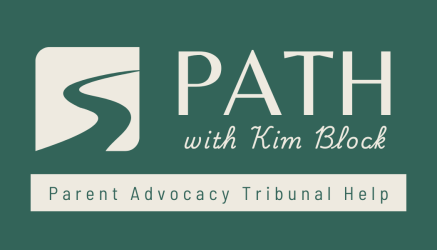
Global BC: An unnamed school district in British Columbia has been ordered by the province’s human rights tribunal to pay $5,000 to a student for failing to accommodate her anxiety disorder.

Vancouver Sun – B.C. school district fined $5,000 for failing to address student’s anxiety

CBC – B.C. school district fined for failing to address student’s anxiety

Global News – B.C. school district fined for failing to address student’s anxiety

National Post – School district must pay $5,000 to student with anxiety, B.C. rights tribunal rules

Chek News – B.C. school district fined for failing to address student’s anxiety

SaskToday – B.C. school district told to pay student $5,000 for failing to address her anxiety

BNN Breaking – British Columbia School District Ordered to Compensate Student with Anxiety Disorder

Cochrane Eagle – B.C. school district told to pay student $5,000 for failing to address her anxiety

Info News – BC high school student gets $5,000 after school ignored their anxiety

City News (Toronto) – B.C. school district told to pay student $5,000 for failing to address her anxiety

City News (Kitchener) – B.C. school district told to pay student $5,000 for failing to address her anxiety

City News (Halifax) – B.C. school district told to pay student $5,000 for failing to address her anxiety

Vancouver Is Awesome – B.C. school district told to pay student $5,000 for failing to address her anxiety

Toronto Star – B.C. school district told to pay student $5,000 for failing to address her anxiety

The Brandon Sun – B.C. school district told to pay student $5,000 for failing to address her anxiety

Ottawa Sun – B.C. school district told to pay student $5,000 for failing to address her anxiety

Edmonton Journal – School district must pay $5,000 to student with anxiety, B.C. rights tribunal rules

Rd News Now (Red Deer) – B.C. school district fined for failing to address student’s anxiety

Meadowlake Now – B.C. school district fined for failing to address student’s anxiety

The Free Press – B.C. school district fined for failing to address student’s anxiety

Castanet Kamloops – B.C. school district fined for failing to address student’s anxiety

The Chronicle Journal – B.C. school district told to pay student $5,000 for failing to address her anxiety

The Hamilton Spectator – B.C. school district told to pay student $5,000 for failing to address her anxiety

Toronto Sun – B.C. school district told to pay student $5,000 for failing to address her anxiety

Ground News – BC high school student gets $5,000 after school ignored their anxiety

The Province – B.C. school district fined $5,000 for failing to address student’s anxiety

Moose Jaw Today – B.C. school district told to pay student $5,000 for failing to address her anxiety

Nelson Star – B.C. school district fined for failing to address student’s anxiety

St. Albert Gazette – B.C. school district told to pay student $5,000 for failing to address her anxiety

Ottawa Citizen – School district must pay $5,000 to student with anxiety, B.C. rights tribunal rules

The Star Phoenix – School district must pay $5,000 to student with anxiety, B.C. rights tribunal rules

Lethbridge Hearld – B.C. school district told to pay student $5,000 for failing to address her anxiety

Rocky Mountain Outlook – B.C. school district told to pay student $5,000 for failing to address her anxiety

Prince George Citizen – B.C. school district told to pay student $5,000 for failing to address her anxiety

Penticton Hearld – B.C. school district told to pay student $5,000 for failing to address her anxiety

Pelham Today – B.C. school district told to pay student $5,000 for failing to address her anxiety

The Canadian Press – B.C. school district told to pay student $5,000 for failing to address her anxiety

Vernon Matters – B.C. school district fined for failing to address student’s anxiety

The Calgary Sun – B.C. school district told to pay student $5,000 for failing to address her anxiety

Comox Valley Record – B.C. school district fined for failing to address student’s anxiety

Times Colonist – B.C. school district told to pay student $5,000 for failing to address her anxiety

Halton Hills Today – B.C. school district told to pay student $5,000 for failing to address her anxiety

MSN – B.C. school district told to pay student $5,000 for failing to address her anxiety

Kamloops Now – B.C. school district told to pay student $5,000 for failing to address her anxiety

Powel River Peak – B.C. school district told to pay student $5,000 for failing to address her anxiety

Maple Ridge – B.C. school district fined for failing to address student’s anxiety

Langley Advance Times – B.C. school district fined for failing to address student’s anxiety

New Westminster Record – B.C. school district fined for failing to address student’s anxiety

Surrey Now Leader – B.C. school district fined for failing to address student’s anxiety

Richmond News – B.C. school district told to pay student $5,000 for failing to address her anxiety

North Shore News – B.C. school district told to pay student $5,000 for failing to address her anxiety

Delta Optimist – B.C. school district told to pay student $5,000 for failing to address her anxiety

The Chilliwack Progress – B.C. school district fined for failing to address student’s anxiety

The Burnaby Now – B.C. school district told to pay student $5,000 for failing to address her anxiety

Mission City Record – B.C. school district fined for failing to address student’s anxiety

Hope Standard – B.C. school district fined for failing to address student’s anxiety

The Squamish Chief – B.C. school district told to pay student $5,000 for failing to address her anxiety

Kelowna Daily Courier – B.C. school district told to pay student $5,000 for failing to address her anxiety

Victoria News – B.C. school district fined for failing to address student’s anxiety

Vernon Morning Star – B.C. school district fined for failing to address student’s anxiety

Town and Country Today – B.C. school district told to pay student $5,000 for failing to address her anxiety

Timmins Today -B.C. school district told to pay student $5,000 for failing to address her anxiety

Bradford Today – B.C. school district told to pay student $5,000 for failing to address her anxiety

*** This is not the full list, but I just can’t keep up.

Law Blogs

HR Law Canada – January 4th, 2024

Self-represented Parent of Child’s Education Discrimination Case – Partial Win – Human Rights Tribunal

This is the only completed case that I have seen by a self-represented parent in BC, in an education case. And they succeeded in a partial win.

Student (by Parent) v. School District, 2023 BCHRT 237

Some important gems in this decision that I see are:

Meaningful inquiry

[99]           Next, in B v. School District, 2019 BCHRT 170, the evidence supported that the school district provided the child with the recommended supports and accommodations. The Tribunal found that it was “only with hindsight” that it was possible to say that the child could have benefited from more support: para. 81. It dismissed the complaint in part because there was insufficient evidence to demonstrate that the school district reasonably ought to have known that the child required more: para. 98. In contrast here, I have found that the District had sufficient information to trigger some kind of inquiry or response beyond asking the Student how she was doing and, assuming the counsellor did this, advising of available supports.

[100]      In short, I agree with the District that the Parent and Student were obliged to bring forward information relating to accommodation. The Parent did that, when she communicated that the Student had anxiety and trichotillomania and that school was taking a significant toll on her physical and mental health. That information should have been enough to prompt a meaningful inquiry by the school to identify what was triggering the Student’s symptoms and what supports or accommodations may be appropriate to ensure she was able to meaningfully and equitably access her education. The failure to take that step was, in my view, not reasonable. As a result, the disability-related impacts on the Student, arising from conditions in her Language 10 class between April 24 and June 27, 2019, have not been justified and violate s. 8 of the Human Rights Code.

[104]      In sum, I have found that the conditions in the Student’s grade 8 Language 10 class exacerbated the Student’s anxiety and trichotillomania, and that the District failed to take reasonable steps to investigate and address those conditions during the period between April 24, 2019, and June 27, 2019 (the last day of school). I find this is a violation of s. 8 of the Human Rights Code, and warrants a remedy, which I address below.

Around self-advocacy for children with invisible disabilities:

[90]           Generally, it is the obligation of the person seeking accommodation to bring forward the relevant facts: Central Okanagan School District No. 23 v. Renaud, 1992 CanLII 81 (SCC), [1992] 2 SCR 970. This can be challenging for children, and especially challenging for children with invisible disabilities. I agree with the Parent that children who require accommodation in their school are in a different situation than adults seeking accommodation. Though they have a role to play in the process, that role will be age and ability-specific, and the burden cannot be on a child to identify and bring forward the facts necessary for their accommodation.

IEP – For a Child with Generalized Anxiety Disorder and Trichotillomania

[59]           This ends the period of this complaint.  However, it is important to note that, in the Student’s grade 11 year, the school developed an individual education plan, or IEP, for her. This IEP set out the Student’s strengths, learning preferences, and goals. It identified specific supports for the Student, including flexible due dates, ensuring the Student was not put on the spot in class, reducing workload whenever possible, providing a quiet learning environment, and frequent teacher check ins. It also established that the Student would meet bi-monthly with the school counsellor to work on her goals. The Student’s grade 11 counsellor explains that she saw the IEP as a way to reduce the burden on the Parent and to support the Student to advocate for herself. From the Parent’s perspective, this was a welcome development that should have been done much sooner.

[7]               In this case, there is no dispute that the Student has disabilities, namely generalized anxiety disorder accompanied by trichotillomania (hair pulling). She is protected under s. 8 of the Human Rights Code from discrimination in her education. This complaint is about the Parent’s allegation that the symptoms of the Student’s disabilities were exacerbated in grades 8 and 9 because of her experience in Language 10 and Language 11, and that the District failed to accommodate her disability-related needs in those classes.

** Even without a designation at the time, she is still protected under the Human Rights Code.

Mental Health Stigma – Failure to Identify Diagnosis

[34]           The Parent did not see this email at the time. From her perspective, the email was not adequate to appropriately communicate the scope of the Student’s school-related needs. It did not fully communicate what the Parent had told the counsellor, and what she had expected would be passed along to the teachers. She felt it was also not realistic to think that the Student would approach a teacher and ask to be excused; in fact, this was not an option that it seems the Student ever exercised. In the Parent’s view, the failure to identify the Student’s diagnoses perpetuated the silence and stigma of mental health and undermined the Student. The message contrasts, for example, with the communication that the Parent sent to the Student’s teachers at the start of her grade 9 year, which said:

Communicating and providing evidence of a diagnosis

[13]           In light of the Student’s barriers in advocating for herself, the adults in her life have had to take on a more proactive role. The Parent’s open and active communication has been critical to ensuring that the Student’s needs are recognized and met in school. Throughout the Student’s education, the Parent has let her schools know about her disabilities, and that she may require monitoring because she is unlikely to proactively seek the support she needs.

[14]           There is no dispute that, due to the Parent’s advocacy, various individuals within the School District were aware of the Student’s diagnoses before and during the period of this complaint. For example, in the spring of grade 7, the Parent provided the elementary school with a note from the Student’s psychiatrist confirming that the Student had a “long-standing diagnosis of General Anxiety Disorder”. At the Parent’s request, this note was placed in the Student’s school file.

** This is a very important aspect as this ensures that a district has a duty to accommodate.

From the Human Rights Clinic Blog, Stress, Anxiety and the Duty to Accommodate, they explain…

“However, she did not provide any medical information that said she had a mental disability.

The Tribunal dismissed Ms. Matheson’s complaint, stating that “an essential element of a complaint of discrimination in employment on the basis of mental disability is proof that the complainant either had a mental disability… or was perceived to be mentally disabled by the employer.”

Here is Ms. Matheson’s case.

Family Status – Human Rights Complaints in Education

Here is some clarity to something that can be confusing when it comes to parents adding themselves to their child’s human rights complaint in education. (Your complaint will also need to pass the discrimination test.)

You need to file separate complaints. One for your child and one for you. Then, when and if they are both accepted, then you need to file an application to join them.

As a parent, it makes logical sense in our head to just include ourselves in our child’s complaint because we see everything so connected, but that is not the process that one needs to go through. So, to save yourself some time in further applications and playing catch up, when you file your child’s complaint, also file a separate complaint for you. Wait to see if both are accepted and then you need to file a 7.1 Form to join the complaints.

Here is the application page. You will want Application Form 7.1 – General Application. If you go to page 2 of 7, on that list, 7th on the list down, you will see “Join two or more complaints”

It is highly likely that the respondents will be making submissions for them not to be joined, or to dismiss your complaint. So, just mentally be prepared for that.

Here is the groundbreaking case that brought this option out in the open. So thankful for this brave parent.

Groundbreaking BC HRT – Accepts Parent on Child’s HR Complaint

Direct link on CanLII

You may want to quote this case directly in your complaint.

Also, keep in mind the one-year time limit for filing. If you file outside of the one-year time limit you may want to consider this case. Also, be aware that you will need to have evidence of the harm related to your loss of work or emotional harm.

Experience is such a valuable teacher.

If you have any questions, call the BC Human Rights Clinic. They are the best people to talk to about your complaint or any questions about the process. Processes do change, forms change, and with each new human rights case decision that gets posted – arguments can change. (This blog was written on Dec 21st, 2023)