Riddle: Who has the final decision-making power?

Here is the riddle.

  1. School districts are the “clients” in human rights complaints. They are the ones we are filing against. We write out their names as being the respondents on complaint forms. They are the ones who show up to the hearing as the client. The secretary-treasurer will.
  2. Typically, clients hire lawyers. They are the ones who provide “instructions” to their lawyers. Lawyers can give them advice, but the clients are the ones who have the final say – decide to accept settlement offers or not.
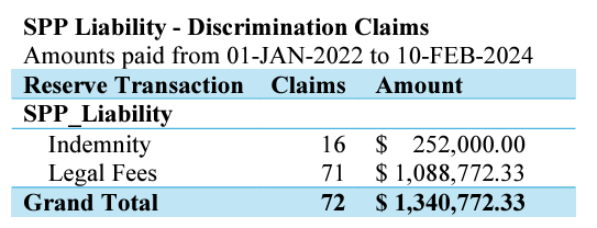
  3. The School Protection Program (SPP) is the insurance for the school district for human rights complaints. They cover all costs, legal fees and settlement payments all paid for by insurance. (paragraph 2) Chilliwack Teachers’ Association v. Neufeld (No.9), 2025 BCHRT 310
  4. The SPP appoints the lawyers and pays for the legal fees of the lawyers.
  5. The lawyers send their invoices to the SPP to get paid for their work hours by insurance.
  6. So first part of the riddle, who is really the client? The school district or the one who pays the bills?
  7. BUT the SPP will also not agree to pay for their legal fees if a client they are covering for doesn’t accept a reasonable offer. As written in this decision. “within a couple of days I got a call from the insurance company and they said ‘you turned down a very reasonable settlement offer, we’re not going to cover your expenses anymore, you’re on your own.” (paragraph 6 & 7) Chilliwack Teachers’ Association v. Neufeld (No. 8), 2025 BCHRT 64. So clients cannot just decide to run parents into the ground without legal reason – or the insurance wont cover.
  8. So who has the final decision making power? The school districts will rely on the lawyers for their legal assessment of whether it is a reasonable settlement or not, or whether there is grounds to keep going and spend more legal fees than the settlement offer. (Insert eye roll) ** This is where it doesn’t make sense to me that an insurance company would go along with this. I take it when this happens it must mean their cost-risk assessment of people is wrong. They underestimate people.
  9. Insurance company relies on the lawyers for their assessment. They have read ALL the emails, know all the details of the case.
  10. The insurance company doesn’t attend the mediation meetings. So a risk analysis is done by who?
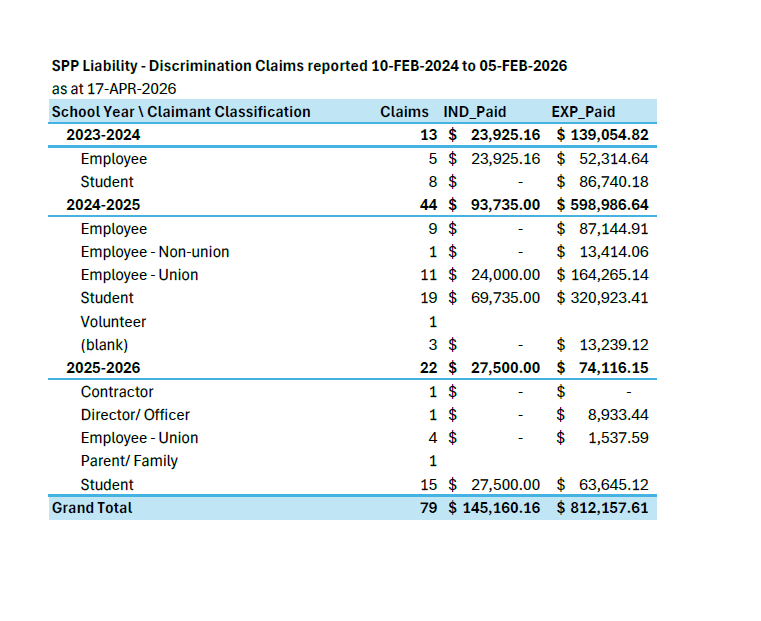
  11. Who profits on having as many billable hours as possible? Answer: Lawyers
  12. Partner status in a law firm is partly based on your ability to bring in clients and increase billable hours. You also benefit personally when the law firm does well, beyond just your salary.
  13. Who personally profits from how much law firms make from legal fees? Answer: Partners in law firms.

.
So, who has the final decision making power?

Who contributes their input into the cost-risk analysis of parents?

School districts? – relying on lawyers for their expertise and law analysis and also relying on the SPP for insurance coverage. Doesn’t sound like they are ones with most sway in this decision making process.

Or is the lawyers with partner status? The ones who personally profit from our human rights complaints?

The answer to this riddle is? To a varying degree, all three parties contribute.

I guess if the district just really wanted to settle and have it be over they could or should be able to pull the client card and say, these are my instructions, we want to settle. The lawyers, in theory, would need to do what they are instructed. There isn’t anyone from SPP that shows up to a mediation meeting.

My money is on the ones with the most sway – the lawyers. The Partners. The senior lawyers on the case. The ones who personally profit from the most billable hours.

Anyone else see the conflict here?

OH, and apparently the only ones keeping track of how much legal fees cost is the insurance company and the law firm. Not the school district and not the Ministry of Education.

Anyone else see the additional conflict here?

The Damage Period

Anytime someone is being sued or has a human rights complaint against them, they are always looking to minimize the damage period. They don’t want to pay for your harm for 2 years, when they can only be legally responsible for 6 months.

Common sense, reality and law don’t always match up. These are legal tests. Law tries to put a box and categorize a human experience.

Depending on the legal issue, there are different ways to minimize the damage period.

I took a defamation workshop (notes here), and I found it to be very interesting. I learned about how, if/when, and how you apologize can impact how much you could potentially be on the hook for paying them. For example, let’s say you go on social media and say some horrible shit about someone. You accuse them of being involved in criminal activity, etc. blah blah blah. A week later, you apologize genuinely, take it all back, and try to repair their reputation. You explain you were angry, you made it all up, etc. The apology acts as a time stamp. It legally stops the clock. Your damage period may only be 7 days. But if you apologize after 2 months and the damage has already been done….they have lost business because of what you have said about them. Well, now your costs are going to be much higher.

This is an important concept in human rights complaints for schools, because I have noticed they are always trying to limit their damage period.

This can be good for us.

If they know you have a human rights complaint submitted, they are going to want to “fix it”. Not because they are emotionally motivated, but more financially motivated to do it. They know they are now going to have to justify their actions and provide evidence of accommodation, potentially, to a tribunal. They are going to want to shrink their damage period by providing your child with accommodations. The more concerned they are about you taking your case to a hearing, the more of a commitment to undoing the harm you are going to get.

This is one of the reasons telling them you have filed a human rights complaint before you find out if it’s been accepted or not can be a form of advocacy for your child.

Some people may disagree with me, but in my experience, a human rights complaint offered my child a level of protection. They got the support they needed, and they were protected by retaliation protections in The Code. Depends on what you are dealing with; fast tracking may make the most sense. Sometimes, having a human rights complaint hang over the district, lasting for years, may be the exact thing that you need to keep your kid safe.

If you don’t notice any changes within the next few months after letting the district know you have filed a complaint, they may genuinely feel that they are accommodating your child up to the point of undue hardship and their decisions are justifiable. Doesn’t mean that they are correct.

Lawyers and districts are always thinking of how to reduce their costs, and they will assess how “cost-risky” you are. They have a lot of parents threatening all sorts of things at them. Reality is, not many parents follow through. So if you are a parent who actually files external complaints, you are now sticking out from the crowd.

My suggestion to anyone is to be thoughtful when filing complaints. Don’t rush into it. Be aware of time limits. With the BC HRT and filing a human rights complaint, you have a year. These can be part of your toolbox. For example, if you are considering filing a Teacher’s Regulation Branch, the Ministry wants you to speak with the superintendent first. That can be useful. You may not even need to file the complaint. Start by using human rights language in your advocacy emails and escalate as needed.

I had no idea how much strategizing was involved in advocacy when I first started out. I have learned A LOT.

Your pen can be your sword.