Accountability in Education – Government Action Needed

Accountability is extremely important in education. People who are the decision makers in children’s education have a lot of power. Their decisions have a direct impact on children’s development, learning, and mental health. Make the wrong decision, and it could send a child on the trajectory of self-harm, suicide, lifelong struggles with unemployment, mental health issues and bouncing around in the prison system. Parents aren’t fighting for preferential treatment; we are fighting for our kids’ chance at a life.

Here was the scariest thought that I had in my head. I couldn’t let go of what happened to my child without the district admitting their staff made huge mistakes. Because it they weren’t even aware or had the will to acknowledge the harm they caused, they would just repeat it. If you are doing everything to shorten our conversations, delay communicating with me, we aren’t getting off on the right foot.

The idea of them just getting to push this under a rug and carry on in their lives as if this never happened was sickening.

Without accountability, they think they are untouchable. They don’t need to answer to anyone. They can just make whatever decisions they want.

That is terrifying to me.

Especially when we are talking about children who have no control over their own lives and kids who just want to have their parents to love them and be liked by others. Just wanting to be included. Kids don’t have control over anything when they are in school. You don’t fall in line, the feedback is fierce. Charts on walls with your name on it – public shaming is their specialty. Time outside revoked. Sorry, no fresh air for you today. Even adults who are incarcerated should get “yard time” on a daily basis.

Accountability in education is extremely important. External complaints are the outside eyes that they need to know, are there. Outside the perimeter. Can be called on at a moment’s notice. Parents get a whiff of denial, minimizing, or gaslighting. We need backup.

Everyone wants accountability because the fear is that the untouchable school admin will keep doing this to other people. More kids will be harmed.

Can you imagine if the Human Rights Code were actually removed?

That could have happened.

It would be a free-for-all. Why? The Human Rights Code doesn’t have value without a way for us to enforce it. THAT is the BC Human Rights Tribunal. The process that we navigate has as much value as the Code itself. If the process is sick or unwell, so is The Code.

Think about that.

Is the BC Human Rights Tribunal process healthy? Or is it sick? And what does that mean for the Power of the Human Rights Code? How long are the delays for a complaint to be accepted? Access delayed is access denied.

Right now, it’s 18 months to 2 years.

For all of the politicians who believe in the importance of the Human Rights Code, you need to put the same importance of that into the BC Human Rights Tribunal, which is incredibly understaffed and overwhelmed with complaints.

We need the government to not just use its words, but show us with action, that they truly believe in the importance of the Human Rights Code.

The Human Rights Code and BC Human Rights Tribunal are intertwined.

If you care about the Human Rights Code, then you must also care about the process of accessing those rights through the BC Human Rights Tribunal.

“We Deny Each and Every Allegation”

When you file a human rights complaint, and if it gets accepted, you will receive an email notifying you that your complaint is proceeding.

The school will get the email as well. This is the first time they will be contacted by the BC Human Rights Tribunal. They will have an opportunity to submit a “response” a few weeks later.

It will be multiple pages long, and they will be defending themselves. Listing all the reasons that your complaint is not true, or if it is true, their decision-making is justified.

Just a heads up. It is very difficult to read.

If you need to move heavy furniture, read this right before you have to do so, and you’ll be done in a jiffy.

Some of it will be downright ridiculous to you.

At some point early on in the response, you will see the sentence “We deny each and every allegation”.

I read that sentence, and I swear, something snapped and changed in me forever.

I didn’t know this at the time, but this gets sent to every single parent.

I have seen a lot of documents from parents across this country, and this type of sentence is in every single one. Even when they know they are guilty, it doesn’t matter. I would be shocked if this sentence didn’t show up in your response.

Now. I have some thoughts on this.

I am not sure how this sentence started or who thought this would be a good idea to send to people a long time ago, but sending this to an already irate parent is not the most intelligent thing to do. In fact, you are shooting yourself in the foot as far as I am concerned.

I can tell you that after my eyeballs reached the end of this sentence, I had decided that I was taking my case to a hearing. And, I stuck to it. If I ever needed to refill my gas tank, I just re-read this one line. I was refuelled and back in action.

What I read from that sentence was this:

“Dear Kim. You have been cordially invited to attend a hearing. We do hope you will attend. We look forward to the duel.”

And my response was

“Sounds splashing. I shall be there!”

If you want to pick a fight with a mama bear, please do send this to them. I wish you good luck. The blessings will rain down upon you.

For the parents reading this shit, just know, they have to write something. They certainly are not going to send a response that says…. “ummm yup, guilty, we actually did everything they said. We thought we would get away with it…. but gosh… I guess not. Guilty!”

They will take slices of “truth” and state them as they are the most relevant important facts known to humankind. Just because they are writing stuff down doesn’t mean it is true, doesn’t mean they have evidence to back up what they are saying and doesn’t mean their arguments are strong. They could be very legally weak. For example, “XXXXX passed the class.” Meanwhile, we all know it’s because you hired a tutor. You get the idea. Or “XXXXX never asked for ________.” Meanwhile, we know that they never asked for anything because they were terrified.

But that’s what they get paid the big bucks for. (Insert eye roll)

We run on anger.

Thanks for pissing me off. xoxo. That was an excellent strategy. Cheers!

I now read that sentence and crack up. I need it on a t-shirt. It’s incredible how different I feel about these things as I look back in time, years later. Lots of things are shifting as time moves along.

So, if it propels you forward, then awesome. Read it hundreds of times.

If it’s anxiety-producing, every single person gets it. It’s not personal. It’s just one of their standard, boring, meaningless sentences. Them denying things…. heavens to Betsy. Shocking. They just plunk it in.

Improper Conduct – Hiding Disclosure

There is a new human rights decision out today, and it is not education-related. BUT, there is a part of this decision that I do want to highlight because what this person experiences is something parents need to be aware of. I struggled with disclosure issues. What a fight! Even if they tell you they don’t have documents, make an application anyway! Surprise surprise! It does exist!

Neske v. Sobeys Inc. (No.2), 2026 BCHRT 37

This person was awarded an extra $15,000 for costs due to the respondents withholding evidence weeks before the hearing.

*******

[156]      Ms. Neske alleges that Sobeys engaged in improper conduct by failing to disclose material documents until the weeks leading up to the hearing. She submits that during the dismissal application process, Sobeys selectively withheld key documents pertaining to its discussions about restructuring management in the pharmacy department, and that as a result, her complaint could have been unjustly dismissed. She argues that in the circumstances, Sobeys conduct was reprehensible and deserving of a significant award of costs. She seeks an award in the amount of her legal fees up to the date of the application to dismiss, with the actual amount to be agreed on by the parties. Alternatively, she seeks an order of $15,000.

[157]      Sobeys says that costs are not warranted in this case. It submits that the threshold for a finding of improper conduct is high and imports a notion of intentional wrongdoing or culpable action which a reasonable person would know is wrong, and which has a significant and detrimental impact on the hearing. It further submits that there was nothing improper about its disclosure in this case and there has not been any prejudice to Ms. Neske. It says that in its decision to deny Sobeys’ dismissal application, the Tribunal highlighted a lack of information about the elimination of the position, and as a result, Sobeys searched for and identified additional documentation which was disclosed in advance of the hearing.

[158]      I am satisfied that an award of costs for improper conduct is appropriate in the present case.

********

I had to file so many applications for documents, and then I was getting ridiculous evidence that was just GOLD. Also, I noticed a few months before the hearing, suddenly other documents were being given to me that I was never even aware of. They clearly didn’t want an improper cost awarded for them for only giving them over weeks before the hearing. But if they didn’t give them to me and the hearing occured and it was discovered during questioning that these documents existed, then they’d be in big trouble.

So, what do we do about this?

I have an idea.

This is where we can all work together.

I want to create a list of possible documents parents should request in Freedom of Information Requests or during the document disclosure phase.

Every time I learn of a new possible document, I’ll add it to the list.

I’ll start

  • Counselling intake notes or intake form
  • Union meeting notes. (When teachers are in trouble, they have a meeting with the principal and often a union representative)
  • School-Based Team Meeting Notes
  • Student File (The office one, counselling file, LSS file)
  • Work safe incident report form
  • IEP meeting notes
  • Employee file (paper and digital)
  • Complaint file at the Teacher’s Regulation Branch
    .

Anything else?

Teachers….. what other kind of documents do you all fill out?

I will start a new page with this list when I get some more info for people to refer back to. Let’s go team! Many hands make light work.

EDIT: Suggestions from others

Threat/violence incident reports

Attendance records with reasons for absence listed (many times being sent home is marked as “parent excused”)

All communication between outside agencies and specialists

Raw scores from any formal or informal assessments, including reading screeners

Raw scores from all standardized assessments

Principal incident logs (often maintained outside the student file)

EA logs or daily support notes

Behaviour tracking forms or data collection sheets

Violence Threat Risk Assessment (VTRA) reports

Union grievances

Access to Information in Education – Privacy Rights

Parents in BC are restricted to information that other parents have access to in other provinces in Canada.

Two examples:

  1. Legal fees for human rights complaints
  2. Teachers’ Regulation Branch (TRB) – Ministry of Education
    .

Legal Fees

Parents of Carter Churchill won a human rights complaint against the Newfoundland and Labrador English School District (full Case here). They submitted an Freedom of Information request (FOI) and they got the complete breakdown of legal fees. It revealed what they spent their legal costs on to fight a 5-year old Deaf child from access an interpreter in kindergarten – $682 thousand dollars. Here is an article on it.

When I sent the exact same FOI request to my child’s district, I got S.14 – client privilege arguments. I filed an OIPC complaint and the OIPC backed them up. The districts arguments were that the breakdown would reveal legal communications. When I asked OIPC why I couldn’t access the same information that other parents could in another province I was told that the BC privacy laws are different in BC.

If you want to know the legal fees I recommend you go the route of filing an FOI with the Ministry of Finance. Ask for the total costs, not the break down. When you file the FOI tell them you are filing it under S.25 – public interest. If they fight you, you can offer up this case. Order 1728

Ok, now let’s talk about the TRB

Teacher’s Documents – TRB

In Ontario when parents file a complaint against a teacher, the teacher will respond to the complaint. The parents/caregivers get a copy of that. In BC, we do not. You will have no idea what the teacher submitted in their own defense or what they said. In my experience, it’s usually a pack of lies. If you file a FOI request you will get one piece of paper with a section written on it.

There is a new OIPC decision that outlines the legal arguments that BC has that keeps everything a teacher submits away from parental eyes. Order F26-10. The OIPC clearly does not want the Ministry of Education and Child Care filing a Judicial Review. While the parent is going to receive process documents, still nothing. Backed up by BC laws and an adjudicator who doesn’t think the public cares enough about education or the TRB. If anyone or organization wants to fight this, this decision is your stepping stone. It outlines all of the legal issues you are going to need to navigate. This is a stepping stone for anyone who wants to take this issue and elevate their fight.

In the meantime, we can use our knowledge of the system to get access to all of these documents in other ways. That way is the HUMAN RIGHTS TRIBUNAL. If a mediation meeting fails and you are continuing along in your complaint, you will reach a document disclosure stage. You can file a general application for documents. The school districts lawyers are going to try and persuade you of this. They will tell you that your request is “inappropriate” and send you to the TRB. (By the way – when they tell you what you are doing is inappropriate – you have hit a nerve. You are probably on the right track and they are very nervous about you continuing.) Do not believe them when they tell you to go to the TRB. They know it is a dead end. The evidence that I received getting documents from the TRB was fall of your chair, shocking evidence. Things I wasn’t even expecting or would have thought to ask for. I filed on a group of people and they ended up trying to blame the other person, submitting evidence that the other person was guilty. Beautiful! Thank you very much for that. So, they feel very safe that their documents are going to be protected. Use their false sense of safety. If the lawyers are offering you a settlement agreement you can’t live with, you can let them know that you will be filing an application for TRB documents. You can use the arguments of relevance and credibility of a future witness.

Remember that school districts will never just lay out all of the evidence you need due to their goals of reducing their liability. Also, if you want to ponder over who has all the decision making power in this process, here is blog about this question, the riddle of who is Wizard of Oz pulling all the strings.

Conclusion

BC’s privacy laws are stricter in BC, or the organizations in BC just don’t have a backbone to go up against the government. Either way… not so great for us. But we can use another routes through the maze to get what we want. The more you know about how to navigate all of the external complaint systems, the further you will get.

Neufeld Litigation History

Some people say that one person can’t make a difference. Well, this is an example of how untrue that statement is. One person can make a difference. This one person is so discriminatory, hateful and abusive towards a specific community of beautiful people that he has created the most glorious legal decisions that will help pave the way for the equity, free speech in the right for advocacy and the respect that the 2SLGBTQ+ community deserve.

We can’t forget about his famous Supreme Court of Canada and the decision that allows marginalized communities to stand up for themselves in the name of advocacy without facing defamation lawsuits.

It takes very brave people to stand up and fight. The famous quote “The only thing necessary for the triumph of evil is for good men to do nothing”. Well. Everyone decided to do something. And having the perseverance, and determination to willingly go into lengthy litigation battles is never easy.

However, clearly, we have good people in this world who will not stand around and allow this type of behavior to be acceptable. And because of that, we have now this incredible history that is already been cited in hundreds of other legal cases. The gift that keeps giving.

Supreme Court of Canada

Hansman v. Neufeld, 2023 SCC 14 (CanLII), [2023] 1 SCR 519

Glen Hansman v. Barry Neufeld, 2022 CanLII 693 (SCC)

Supreme Court of Canada


British Columbia Teachers’ Association v Neufeld, 2023 BCSC 1460

Hansman

Neufeld v. Hansman, 2021 BCCA 222

Neufeld v Hansman, 2019 BCSC 2028

Lang

Lang v Neufeld, 2022 BCSC 693


Lang v Neufeld
, 2021 BCSC 1468


Lang v Neufeld
, 2022 BCSC 130

Bondar

Bondar v Neufeld, 2024 BCSC 594


Neufeld
 v. Bondar
, 2025 BCCA 51


Bondar v Neufeld
, 2023 BCSC 2496

BC Human Rights Tribunal

Chilliwack Teachers’ Association v. Neufeld (No. 11), 2026 BCHRT 50 – Costs

Chilliwack Teachers’ Association v. Neufeld (No. 10), 2026 BCHRT 49 – Final Decision


Chilliwack Teachers’ Association v. Neufeld (No.9), 2025 BCHRT 310


Chilliwack Teachers’ Association v. Neufeld (No. 8), 2025 BCHRT 64


Chilliwack Teachers’ Association v. Neufeld (No. 7), 2025 BCHRT 34


Chilliwack Teachers’ Association v. Neufeld (No. 6), 2024 BCHRT 337


Chilliwack Teachers’ Association v. Neufeld (No. 5), 2024 BCHRT 332


Chilliwack Teachers’ Association v. Neufeld (No. 4), 2024 BCHRT 284

Chilliwack Teachers’ Association v. Neufeld (No.3), 2024 BCHRT 232


Chilliwack Teachers’ Association v. Neufeld (No. 2), 2024 BCHRT 180


Chilliwack Teachers’ Association v. Neufeld, 2021 BCHRT 6

Payments – From Judgements

BC HRT (Decision 11) – $10,000

BH HRT (Decision 10) – $442.00 + $750,000 + interest

Cain Bondar – $35,000 + $10,000

Total = $805,422.00

Media

Commissioner welcomes decision protecting LGBTQ people from hate speech

$750,000: B.C. Human Rights Tribunal orders payout in ruling against former school trustee

Former Chilliwack school trustee Barry Neufeld ordered to pay $750K for violating Human Rights Code

Former B.C. school trustee ordered to pay $750K in discrimination, hate speech complaint

BCTF celebrates huge win for trans rights and school inclusivity at BC Human Rights Tribunal

Competing values and the application of anti-SLAPP legislation: The Supreme Court of Canada’s decision in Hansman v. Neufeld

The Right to React to Harmful Speech: SCC dismisses a defamation action using anti-SLAPP law, highlighting the public interest in protecting counter-speech

BC Commissioner Intervening BCTF v. Neufeld

Hansman v Neufled [2022] – West Coast Leaf

Some examples of paragraphs from his decisions

Chilliwack Teachers’ Association v. Neufeld (No. 10), 2026 BCHRT 49 – Final Decision

[305] We have also found that Mr. Neufeld exposed the Class to hatred or contempt, and published materials indicating discrimination against them. In doing so, Mr. Neufeld exposed the members of the Class to repeated messages that their very existence was a threat to children, families, and social order. He invoked the most insidious discriminatory stereotypes and tropes to denigrate their efforts to create an education environment that is inclusive for 2SLGBTQIA+ students. He used his power and public platform to call for their erasure in the public school system that they dedicate their working lives to. He described their lives and their loved ones in language that was dehumanizing, delegitimizing, and sought to strip them of their inherent dignity. These harms of hate and discriminatory speech are extremely serious and damaging: Oger (No. 7) at para. 226.

Chilliwack Teachers’ Association v. Neufeld (No. 11), 2026 BCHRT 50

[2]               Throughout the complaint, Mr. Neufeld has repeatedly and flagrantly demonstrated his disregard for the Human Rights Tribunal and its process. He has deliberately violated the Tribunal’s Rules and orders, undermining the fair and efficient processing of the complaint. His conduct has caused the CTA and the Tribunal to divert resources away from a resolution of the complaint on its merits, towards policing and correcting behaviour which Mr. Neufeld knew or ought to have known was wrong. In our view, this conduct warrants rebuke. We order Mr. Neufeld to pay CTA $10,000 in costs.


Chilliwack Teachers’ Association v. Neufeld (No. 8), 2025 BCHRT 64

[7]               In an August 2024 interview posted online, Mr. Neufeld divulged the following:

But then in February of this year they said ‘Hey Barry, the Chilliwack Teachers’ Association want to make a deal out of court.’ And I said ‘well, what do they want?’ And they said ‘they just want you to apologize for your opinions. They want you to take a sensitivity training so you can understand what transgender is all about. They want you to promise never to run for public office in BC again. And they want you to donate $50,000 to an LGBT charity.’ And I said ‘okay I’ll think about it.’

.…

 So I politely told them – I said ‘no, I won’t apologize. They won’t give me any names of who I’m apologizing to. I’m not going to take any Marxist puppy-dog training because I’ve studied this issue for six years. I know both sides of the argument, backwards and forwards. And they have no right to tell me I can’t run for public office. And finally, even if the money’s not mine’ – see my lawyers had told me that if there’s a penalty, my indemnity insurance would cover it – even if the money’s not mine, I don’t want it to go to an organization that damages children.’ 

So, that was that. And they said, ‘well that’s pretty stupid. You’re going to be found guilty of hate speech.’ And I said ‘well at my age, I don’t really care.’ So, within a couple of days I got a call from the insurance company and they said ‘you turned down a very reasonable settlement offer, we’re not going to cover your expenses anymore, you’re on your own.’  

… So that was in February…just this past February. So I started casting about, looking for a new lawyer. And well my government lawyer says ‘we’ll defend you but you’re going to lose anyways. But we need a retainer of $150,000.’ 

… And then there was another um pro bono law firm and they said I should’ve taken the deal, because I’m going to lose. 

Advocating for Systemic Change

There is a comedian out there who has a really smart and funny skit. “People will die for their country, but they wont do math for their country.” Dying for your country is easy, doing math is hard.

In concept, heading out into battle for your country is glamorous. People have statues built on their heroics and they get metals. It’s emotionally driven, and adrenaline pumping. Doing math, studying and consistently quietly working hard is unseen, and long term visionary thinking. Systemic change takes years. It takes doing “math” for your community. The building of relationships, the consistent unseen work, and sustainability over time. No statues. Maybe some people recognize your greatness, but it is generally uncongratulated work.

I want to talk about how to advocate for systemic change.

To place myself in this topic: I have a degree in Human Relations from Concordia University, Montreal. This is a degree in how people function in teams, families and organizations and how they can be healthy or toxic.

Friction in groups is very important for creativity and productivity. Every team will reach a conflict stage, and when managed well, teams of can be very successful. Having a diverse group of voices, lives experience and expertise is essential for fighting off groupthink. Which is a death sentence for teams that are connected to social policy.

There are open teams. Ones that allow feedback and the external environment to interact with it. Communication will flow in and out.

There are closed teams. Ones that build a wall and lock the doors. An example would be a cult.

It takes a long time to build successfully functioning teams. The most fundamental element to successful groups is TRUST. Firecracker groups start big and are full of energy, but explode and burn out.

Social change requires building credibility and trust with the community as a whole. It requires understanding how everyone is connected. The history of how we got here, what has historically worked and failed. We are all standing on the shoulders of giants who have paved paths for us. We learn from our history, how we have had success, failed, and pivoted. There is an element of risk in being willing to fall flat on your face and get back up and keep trying. Looking for the lessons. Listening to disabled voices in disability advocacy has always been key. Having a growth mindset, humility, integrity, a willingness to fail and keep going is a solid foundation for long term advocacy.

For a social movement, all established community groups need to come together and work together as ONE.

I am reposting my page on Understanding Systemic Change that I wrote years ago, originally on my Speaking Up BC website.


Let’s do “math” for our community and our children.


*******

Understanding Systemic Change

Some people when they advocate can reach a point when they are beyond frustrated, angry and bitter. Some people have decided to lash out at other people. The very people they are in the trenches with. They end up making it harder and more emotionally draining for parents who are advocating. I don’t think they realize the impact and how upsetting it is for other parents to hear their comments. Crabs in the bucket. My perception is that there is a lack of understanding of how human systems work, and how systemic change occurs and they are frustrated because how they think they should be able to make systemic change occur, isn’t occurring. The wider the gap between our expectations and reality, the more depressed or angry we will become.

I can’t fit everything in this blog about how human systems work, so for this blog I am going to focus on macro-level and micro-level aspects. Macro-level systems are the big ones. The government bodies that include hundreds and thousands of people. They are our political system, the structure of our economy, the structure from the Constitution of Canada and the impact on our system, democracy, our education systems with public schools, private schools, online schools etc. The large groups of multiple moving parts that involve many complex layers, and are maintained by many layers of legislation, policy, and guidelines. Think of many many gears all locked together. They are all moving. Wish to change one gear, and they will all be impacted. These systems have formal codes of conduct and contracts. Also, the unwritten social contracts and social rules that glues everyone together. These systems are tidal wave systems that do not get pushed off course unless something massive happens. I haven’t even mentioned the topic of power. That’s a whole other blog. Systems that are oppressive like to remain that way, unless it’s detrimental to themselves to not change.

Micro-level changes are things that happen on one-to-one individual levels. Individual social interactions. A 20-minute conversation is a micro-level interaction. This is when we advocate with our child’s teacher and they learn something new about ADHD and now they are adapting their teaching and accepting of movement breaks because they understand things differently.

Some people think, that if we only change this one law, or have this one human rights case, or if we change one piece of legislation then everything will be solved for all of the following generations.

I can promise you, if this is how you think, this is where your pain is because that will never happen. Change will never happen because of one person. Ever. We are dealing with way too many macro-level systems all connected and interacting with each other, AND we are dealing with way too many micro-level individual interactions of ableism and lack of information about disabilities. One person is not going to swoop in and solve it all. The education system provincially has hundreds of thousands of people working in these systems. There is not one solution. If we are waiting for a hero to ride in on a horse and save us all, we’ll be waiting for a very long time.

It takes teams. Plural. Many teams. And in our society, it is going to take multiple teams all working together with a common goal for a sustained period of time. These teams are going to have to cover ALL different areas and all different aspects of the multiple gears.

There are 4 elements to a social movement.

  1. There is a trigger event that inspires an intense reaction from the community
  2. ALL of the already established community groups come together and work together as ONE
  3. They have a common simple message that the public can understand. (Eg. Black Lives Matter)
  4. The advocacy of this one common message and connection of all of the groups needs to be for a long sustained period of time.
    .

That is a social movement.

Think of the women’s movement in the 70’s. We still have women’s issues today. But women entering the workforce was quite the shift that started it all off. The different professions women are working in today is because of that social movement.

We need to work at both a macro-level and a micro-level. Even if we had a piece of legislation change or a fantastic policy manual from the government we are still going to be dealing with the individual people who are ableists and want power over. Any change coming from the top down and they will figure out ways to get around it, ignore it, and we will still be struggling with the same shit.

It’s not that we just need to get EA standards and everything will change.

It’s not that we just need to get legislation changed.

It’s not that we just need this one class action human rights case.

We need everyone. We need ALL of it. It is all hands on deck. We need every disability organization, we need all parents, we need trustees, we need educators, we need PAC’s, we need unions, we need everyone working in their own corners advocating for accessibility and inclusion.

Anything less than that, and we will not be able to move the needle enough to notice change in this generation.

It takes a micro-level AND a macro-level response.

Social change, where people really feel that the needle moved, that is noticeable… usually takes 3 generations. But not always…

We are in a catch-22 when it comes to legislation changes. The government won’t enact legislation or funding commitments to items that they feel the majority of their constituents don’t want. Their goal is to get re-elected. If they don’t get re-elected they can’t pursue any of their goals. So, if the public doesn’t care about kids with disabilities and their access to an equitable education…. the government isn’t going to put a massive amount of money into that. They need to make their constituents happy. We also know that society is generally ableist. And oppressive. We are also dealing with evolutionary instincts. Humans are complex. We are a mix of beautifulness and survival instincts. When resources are tight, we want them for ourselves.

Everyone’s advocacy efforts are all part of the work. It all matters. Every single one of you. There is no one single solution or even one single group that is going to just fix everything in a couple of years. It takes massive amounts of people ALL advocating in our own corners. Micro-level and macro-level advocacy work. We can’t just change legislation. We need to change the hearts and minds of everyone to uphold and embrace the legislation even if it does change.

Having said all of this:”Never doubt that a small group of thoughtful, committed citizens can change the world; indeed, it’s the only thing that ever has” -Margaret Mead

Very true. It all starts somewhere. Seeds get planted by small groups that grow over time.

We need the wild risk takers who don’t follow the beaten path, to envision something more, to push past what has ever been done before, to create cracks in the system and allow new growth to occur.

If you are someone who is belittling other parents’ advocacy efforts. Telling them there is no point to any of their work, and that the system will never change. Which is actually impossible, because systems always change. They are maintained by people and society changes all the time. Please, and I say this with love in my heart. Please find counselling or keep your comments to yourself. The human rights process may have been a waste of some people, which I am truly sorry. The human rights system enforces the Human Rights Code and creates the Duty to Accommodate which is the strongest piece of advocacy tools that we have as parents, and those cases that advanced the Code were because of parents who sacrificed. You are not helping anyone by belittling all of parents’ advocacy and telling them there is no point. You are now the one making this worse for them. When you make statements telling people to give up, you are now oppressing them. I have zero tolerance for that.

This is a marathon. Not a sprint.

It’s a team sport. We all need to train individually but run together.

Let’s build each other up and be supportive.

Here are blogs on systemic change.

Systemic Imperfection
Policy – “soft policing”
Groupthink….Does it Exist in School Districts and on Boards of Education
What Does Ableism Look Like in Schools…It Looks Like This!
Who does Society care about?
Why Can’t we Just Sue the Government?
Families are Advocating – A Year in Review for HRT & OIPC and Media
“this family needed help beyond what I’m trained for” (para 58)
Systemic Impacts of Scarcity in Education

How to Gather Evidence for the BC Human Rights Tribunal

Here are some options to consider. Gathering evidence is VERY important. It will make the school district and their lawyers very uncomfortable. They will not like it, and it could help you get that settlement you are looking for. It communicates to the lawyers that you are preparing for a hearing. They will also be concerned that if you have more evidence, you will feel more confident in your case and may ask for a higher settlement amount. So gathering evidence is EXCELLENT behaviour communication. Because remember, they don’t believe your words, but they do believe your behaviour.

You also want to be collecting evidence when things are going well. You never know what could happen in the future.

Step OneCreate your own evidence

  1. Before you even file a Freedom of Information (FOI) request, you are going to be gathering your evidence while you advocate. Emails are KEY.
  2. Examples of this are:
    • After any oral communication (phone call/school meeting/face-to-face conversation) is done, send a follow up email with the meeting notes, summary of the conversation, and key action items or decisions that came from the meeting/conversation. Ask them to reply if you misunderstood anything, or if anything is incorrect.
    • Send emails that document your process. Who you spoke to, who you have emailed, about your advocacy. Documenting a timeline of your process is key.
  3. For some people, situations are so desperate that they are recording school meetings. I have never done this myself but for some people they have gathered the most incredible evidence. In Canada we have one person consent privacy laws. Please do your own research on this. **** IF you are an employee. PLEASE PLEASE consult with an employment lawyer before you do this. Recording your colleagues is VERY different and the case law on this bounces around a lot. You could lose your job over this. So, please consult with a lawyer.
  4. Gather evidence at home. Take pictures of bruises, homework pages, etc. I know this part will feel like an intrusion in your child’s privacy, but you may want to set up your camera to video their meltdowns at home, or them in a conversation with you about school refusal.
    .

Step TwoFile a FOI

  1. File a Freedom of Information (FOI) request
  2. Here are the instructions. **** You are going to want to name every single person you have had a conversation with and list their supervisors above them. Also include the superintendent.
    .

With the FOI request, you will most likely never get all the evidence that exists. The school district is certainly not going to just hand you over all the evidence you will need to win your case. They are always wanting to reduce their liability.

But what you may get are some stepping stones that could be very helpful later.

Also check to make sure you think you have everything. If you feel like documents are missing or you want them to remove their redactions, you can file an OIPC complaint.

There was one case where during an OIPC process, the Ministry of Education accidently sent the people everything that they were hiding from them. Order 2833

[4] During the inquiry, the Ministry mistakenly gave the applicant access to a largely unredacted copy of the records (unredacted records) that was intended to be provided only to the OIPC. In doing so, the Ministry mistakenly disclosed to the applicant all the information in dispute under ss. 3(1)(b) and 13(1) and most of the information in dispute under s. 22(1).

Also, the school district I made a request through, accidently sent me emails to their lawyers. I had no idea the lawyers were involved so early on. That was an interesting piece of information. So, hey, why not give it a try, submit an FOI, you never know what you will get.
.

Step Three. – Filing applications for documents through the BC Human Rights Tribunal (BC HRT) process

PART A – Getting TRB documents

  1. When you file a human rights complaint, you may want to consider if you want to file Teacher Regulation Branch (TRB) complaints as well.
  2. This is completely depending on your situation, but you may want to consider not just filing on one person but on multiple people. If you include a principal and file a complaint, it is standard for them to meet with the teacher in trouble with a union rep and there will be meeting minutes. They may submit these to show the TRB they are doing their job and put blame on the teacher. ** But remember, every person you file on you will need to link their behaviour to not being in line with the teachers standards. You can file on teachers, principals and district staff. Anyone who is a certificate holder.
  3. The school staff think that their documents and communication with the TRB are completely confidential. And they are to a point. If you submit an FOI request after the complaint process is finished, you wont get any of the teacher documents. (Hold this point for later)
  4. A strategy that they will do if there are multiple filings, on the group is that they will blame each other and provide evidence on the other people in order to get the heat off of them.
  5. Then, during the human rights complaint process if the mediation settlement meeting fails and you move onto the document disclosure stage, this is where the action happens.
  6. You can file an application for documents. During the document disclosure phase the respondents (school districts lawyers) will give you a bunch of documents. I can tell you right now, it will be crap. They will be selecting documents meant to send you a message. It will be long. Mostly your communications. They will pick out the ones you are going to not like the most. But here, yet again, they aren’t just going to lay out all of the evidence for you. You are going to need to fight for it. And that fight for it, will be via an application process. Form 7.1 – Order a party to give you documents.
  7. You can follow this process and apply for documents from your TRB complaints. For me, this process gave me the most incredible evidence. Like, shockingly so.
  8. You can explain to the tribunal why these documents are relevant to your case, or how you need these documents to question their credibility at the hearing. Be very thoughtful when you write your application.
  9. ****** No matter what, if you request documents and they tell you they don’t have them, DON’T BELIEVE THEM. File an application anyways. This happened to me, I didn’t believe them. Filed an application, and within weeks I got exactly what I knew they had. This was even after an unsuccessful OIPC complaint. The BC HRT has stronger teeth than the OIPC.
  10. Filing applications not only gets you evidence, it makes you expensive. This encourages them even more to settle. Something to keep in mind in a settlement meeting, you may want to let them know all of the applications you plan on filing for the document disclosure part of the process. Which, you can file applications continually up to the hearing. Make this process very expensive for them. The School Protection Program is not going to want to pay for all of these lawyer fees.
    .

PART B – Become a detective

  1. The second step after you get your FOI is go through everything with a fine tooth comb and look at the names on the email addresses. Who is there, but also who is missing. Think if that information is relevant.
  2. Count the pages, are there pages missing. Did they remove anything. (I had missing pages)
  3. Read the emails. Did they mention a meeting or any other documents being created? If so, you are now going to include that in your application for more documents. Follow the trail until you hit a dead end. You are going to want those meeting minutes and a copy of any documents that were created from those meetings.
    .

PART C – What to just automatically request

  1. Request minutes for meetings. If teachers are in trouble, they will be meeting with the principal and a union rep. Request those meeting minutes. There is potential golden evidence in there.
  2. Emails – include teachers, LSS teachers, always a principal, and whoever you last met with – whatever level they are at, request emails that include the name of their supervisor.
  3. Always include the superintendent. ** We want to know if they were involved and aware. They could be a potential witness at your hearing. School district is going to jump when they see their name on the witness list.
    .

Step Four – Another round

  1. Whenever you get documents from your applications, go through everything with a fine tooth comb again. Are there more breadcrumbs that talk about other meetings, involve other people, refer to other documents?
  2. Request that they remove ALL the redactions. This can be done informally, just through an email to the lawyers, and if they don’t – file another application.

.

You are going to need to put your detective hat on and become Nancy Drew. They will most likely be hiding evidence from you, and the tribunal will only be basing their decision on the evidence they have in front of them, not your opinion or thoughts. When people don’t have evidence the tribunal will say something along the lines of your case being dismissed because you haven’t brought your allegations out of the realm of conjecture. Gathering your evidence will be KEY. Be patient. Be methodical. Start the hunt.

Also, remember to document when things are going well.

As this parent reports,

“Districts often argue that they did the best they could with the information they had at the time. Keeping thorough documentation when things are going well makes it’ll a lot more difficult to use this argument, since you will be able to clearly show when specific accommodations were removed and the harm that resulted. I think it also adds to my credibility as a parent, showing that I collaborate in good faith and facilitate accommodations.” – Parent

Related Blogs
Let’s Talk about Hindsight
Why is Documentation so Important?
Evidence of Harm. Effective advocacy in Education
Liability in Education

Riddle: Who has the final decision-making power?

Here is the riddle.

  1. School districts are the “clients” in human rights complaints. They are the ones we are filing against. We write out their names as being the respondents on complaint forms. They are the ones who show up to the hearing as the client. The secretary-treasurer will.
  2. Typically, clients hire lawyers. They are the ones who provide “instructions” to their lawyers. Lawyers can give them advice, but the clients are the ones who have the final say – decide to accept settlement offers or not.
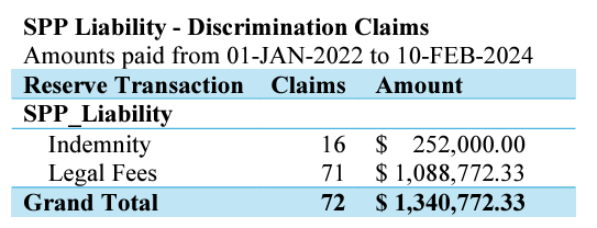
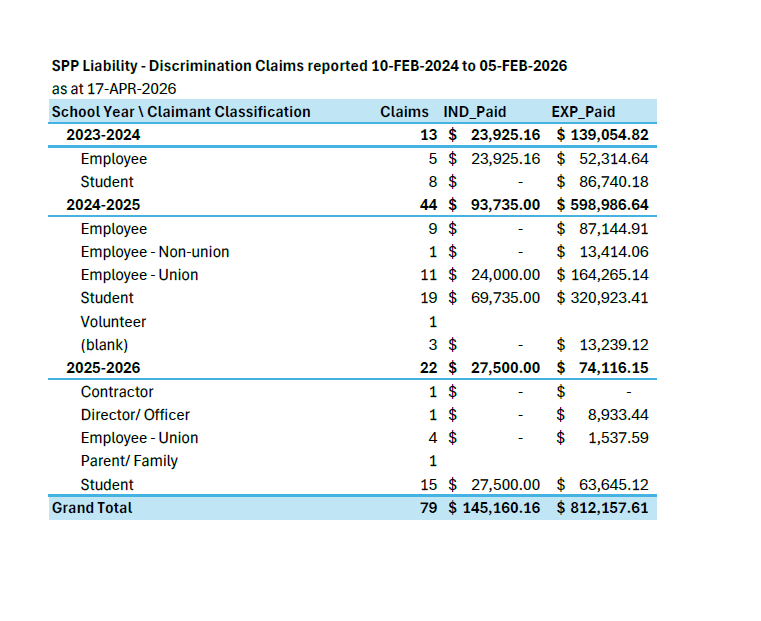
  3. The School Protection Program (SPP) is the insurance for the school district for human rights complaints. They cover all costs, legal fees and settlement payments all paid for by insurance. (paragraph 2) Chilliwack Teachers’ Association v. Neufeld (No.9), 2025 BCHRT 310
  4. The SPP appoints the lawyers and pays for the legal fees of the lawyers.
  5. The lawyers send their invoices to the SPP to get paid for their work hours by insurance.
  6. So first part of the riddle, who is really the client? The school district or the one who pays the bills?
  7. BUT the SPP will also not agree to pay for their legal fees if a client they are covering for doesn’t accept a reasonable offer. As written in this decision. “within a couple of days I got a call from the insurance company and they said ‘you turned down a very reasonable settlement offer, we’re not going to cover your expenses anymore, you’re on your own.” (paragraph 6 & 7) Chilliwack Teachers’ Association v. Neufeld (No. 8), 2025 BCHRT 64. So clients cannot just decide to run parents into the ground without legal reason – or the insurance wont cover.
  8. So who has the final decision making power? The school districts will rely on the lawyers for their legal assessment of whether it is a reasonable settlement or not, or whether there is grounds to keep going and spend more legal fees than the settlement offer. (Insert eye roll) ** This is where it doesn’t make sense to me that an insurance company would go along with this. I take it when this happens it must mean their cost-risk assessment of people is wrong. They underestimate people.
  9. Insurance company relies on the lawyers for their assessment. They have read ALL the emails, know all the details of the case.
  10. The insurance company doesn’t attend the mediation meetings. So a risk analysis is done by who?
  11. Who profits on having as many billable hours as possible? Answer: Lawyers
  12. Partner status in a law firm is partly based on your ability to bring in clients and increase billable hours. You also benefit personally when the law firm does well, beyond just your salary.
  13. Who personally profits from how much law firms make from legal fees? Answer: Partners in law firms.

.
So, who has the final decision making power?

Who contributes their input into the cost-risk analysis of parents?

School districts? – relying on lawyers for their expertise and law analysis and also relying on the SPP for insurance coverage. Doesn’t sound like they are ones with most sway in this decision making process.

Or is the lawyers with partner status? The ones who personally profit from our human rights complaints?

The answer to this riddle is? To a varying degree, all three parties contribute.

I guess if the district just really wanted to settle and have it be over they could or should be able to pull the client card and say, these are my instructions, we want to settle. The lawyers, in theory, would need to do what they are instructed. There isn’t anyone from SPP that shows up to a mediation meeting.

My money is on the ones with the most sway – the lawyers. The Partners. The senior lawyers on the case. The ones who personally profit from the most billable hours.

Anyone else see the conflict here?

OH, and apparently the only ones keeping track of how much legal fees cost is the insurance company and the law firm. Not the school district and not the Ministry of Education.

Anyone else see the additional conflict here?

Newsletter – February 1st, 2026

NEW BLOG: February 1st – EMAILS Question & Answer

News from the BC Human Rights Tribunal: User Feedback on Mediations

Noteworthy Facebook Posts: Here are a couple of Facebook posts that are noteworthy enough to send to your inbox on a Sunday…at least I think.

Ontario College of Teachers

This is a Facebook post from the Ontario College of Teachers that was just on my feed this morning.

(ID: Image of Balancing scales, laptop, books with text: “We are committed to transparency in regulating the teaching profession, and our disciplinary hearings are open to the public. See the full schedule of hearings and how to attend them: http://oct-oeeo.ca/mzm63z)

We used to have a teachers’ college in BC, but it was disolved to its toxicity, and the Ministry of Education absorbed it. The Professional Conduct Unit (Teacher’s Regulation Branch-TRB) is a department of the Ministry of Education and Child Care. For people who like to deep dive on the internet on topics, there was a report about it called “A College Divided: Report of the Fact Finder on the BC College of Teachers,” and there were many newspaper articles about how dysfunctional it was and was described as “toxic”.

There is a massive difference between the Ontario Teachers’ College and here in BC. One of the differences I have been dealing with through the OIPC. But that is a story for another day.

The Ontario Teachers’ College is focused on public trust and transparency. I have written previous blogs on my Speaking Up BC website about TRB and how much I do not like how they operate. (I will be combining them and writing a more organized blog in the future.) The websites are an example of how different they are. Ours is a maze, and theirs is clearer important information for parents.

They also give parents a copy of what teachers submit in their defence. Our TRB does not, and the only way to get access to them, so far, is through an application through the BC Human Rights Tribunal. You will only be able to get to apply for those if you have a failed settlement meeting and are going through document disclosure.

Just want to flag this for everyone. Our current regulatory system could be doing a much better job, better aligned with the public and not protecting teachers. They need to prioritize the needs of children, not adults who need professional development help.

I will link some info in the comments.

Here is the report: A College Divided: Report of the Fact Finder on the BC College of Teachers https://www2.gov.bc.ca/assets/gov/education/administration/kindergarten-to-grade-12/reports-and-publications/2010_factfinder_report_bcct.pdf

Ontario College of Teachers website. They even have tab titled “public protection” https://www.oct.ca/en-ca

Our horrible TRB website https://www2.gov.bc.ca/gov/content/governments/organizational-structure/ministries-organizations/boards-commissions-tribunals/commissioner-for-teacher-regulation

Here are some media articles about it.

The Tyee – Behind the Fight Over Who Runs BC’s College of Teachers

City News – BC Teachers College is Dysfunctional

CBC – Report Slams Teachers College

Hello Everyone,

My P.A.T.H website has been a way to share and collect information for parents/caregivers who are advocating for their neurodivergent/disabled children in the K-12 education system.

It has been a labour of love, healing, and peace for me. I am now quite pleased with the collection of information I am able to provide. Finally, I sleep very well at night.

Knowledge is power. Understanding the rules of the system is vital. It is a tough maze we walk through.

I am hoping people will share this information. I would love to see this rights-based information on other websites. It needs wings, and it needs to fly. So, parents, organizations, and other school advocates, I am pleading with you to add information about human rights, external complaint systems, education cases, and advocacy decisions to your own websites. You don’t need to link this back to me. Just take it and run with it. The priority should always be to provide information to support families so that they can support their kids. I don’t view the information on my website as belonging to me. I don’t own it. Take it, spread it and do more with it.

Some people don’t want to engage with lawyers or senior administrators. They feel it’s overwhelming and outside of their capacity. “It’s too much.” If you are advocating, you are engaging with their risk management process whether you want to be or not. I can assure you, the school will certainly be. I say this with my love in my heart, you either learn this stuff at a rate you can handle and try your best, or find an island to live on and unplug from society. There is no escape. They aren’t asking for your consent to participate in their risk management strategies. Because even if the school views you as a “nice, agreeable person” and of no concern, you are still being evaluated. You are just considered low risk. When resources are this scarce, the squeaky wheel gets the grease. I can assure you – you have more in you than you even know.

Rights-based advocacy is our hope and pathway to equity. ❤️

Emails – Q & A

Emails can be stressful but they are stressful for good reason. They are very important. They are a key tool to your advocacy.

Here is a collection of information that I have either learned from other people who have been advocating in the system for a long time, have learned through research, or from life experience.

Q: How long is it reasonable to wait for an email response?

A: 5 days from someone from the district
3 days from your child’s teacher or Principal
** If it’s time sensitive and you want a faster response – put that in the email

Q: What are some writing tips?

A: Here are some tips:

  1. Use shorter sentences.
  2. Don’t write them a novel if you don’t have to. You want to be concise but still have the details that are needed. After you write it all out, edit it. See what you can remove and reduce. (AI can be helpful for this)
  3. Think of emails as a tool. Quality over quantity. Sending massive amounts of emails are not going to help you. If you overwhelm them with the high volume of emails, they may limit your communication.
  4. Use simple words. Don’t put in fancy language thinking that they will respect you more and are more likely to respond. The goal is clear communication that cannot be misunderstood or misinterpreted
  5. Putting a request for a response date is very important as it allows you to advance up the hierarchy if they don’t respond.
  6. Emails are not private. They can be shown to 30 different people and may end up in a tribunal hearing. Follow the expression, “Dance like no one is watching, email like it will show up in court.
  7. Follow the format for writing an email. (see below)
  8. Make sure you have a clear request in your email.

Q: Is there a format to follow for explaining my thoughts?

A: Yes.

I would suggest you follow this format outlined by the Family Support Institute
https://familysupportbc.com/toolkits/school-meetings-how-to-write-an-email-to-call-a-meeting/

If you are not calling a meeting, just leave that paragraph out.

To add to this format: If you are using rights-based advocacy you will want to make sure you do the following.

  1. Clearly identify your child’s disability-related need (Their disability and their unmet need related to their disability)
  2. Explain the harm that you are witnessing or are aware of
  3. Tell them your child is struggling and explain how
  4. Ask them for help

Why? Because of meaningful inquiry. Human rights protection.

Q: I get overwhelmed with emails, how should I handle this?

A: You can have a separate email address just for school communication. That way, you will only read the emails when you are ready and can have a support person with you when you go into your inbox. It also helps with organization. You can have folders for each of the people you talk to, and divide them by years. KEEP EVERYTHING. Even the positive emails can be helpful as you have evidence of what works.

Q: What should my tone be?

A: I don’t want to tone police people, but I can tell you that making accusations, assumptions into their intent, allegations not backed up with evidence, are all ways to make this more adversarial than what may benefit you. I wouldn’t recommend you send emails when you are mad. You can write them out, and then let them sit for a few hours or next day. Sleep on it. Or send it to a friend for feedback. Get an extra pair of eyes on it.

Q: Is it better to email or meet in person?

A: Emails are a very powerful form of documentation and evidence. If you are meeting in person, I highly suggest you summarize the email and send it to them. Ask them if your summary is correct and if you misunderstood anything to respond to the email. You will need email to gather your evidence.