How to Gather Evidence for the BC Human Rights Tribunal

Here are some options to consider. Gathering evidence is VERY important. It will make the school district and their lawyers very uncomfortable. They will not like it, and it could help you get that settlement you are looking for. It communicates to the lawyers that you are preparing for a hearing. They will also be concerned that if you have more evidence, you will feel more confident in your case and may ask for a higher settlement amount. So gathering evidence is EXCELLENT behaviour communication. Because remember, they don’t believe your words, but they do believe your behaviour.

You also want to be collecting evidence when things are going well. You never know what could happen in the future.

Step OneCreate your own evidence

  1. Before you even file a Freedom of Information (FOI) request, you are going to be gathering your evidence while you advocate. Emails are KEY.
  2. Examples of this are:
    • After any oral communication (phone call/school meeting/face-to-face conversation) is done, send a follow up email with the meeting notes, summary of the conversation, and key action items or decisions that came from the meeting/conversation. Ask them to reply if you misunderstood anything, or if anything is incorrect.
    • Send emails that document your process. Who you spoke to, who you have emailed, about your advocacy. Documenting a timeline of your process is key.
  3. For some people, situations are so desperate that they are recording school meetings. I have never done this myself but for some people they have gathered the most incredible evidence. In Canada we have one person consent privacy laws. Please do your own research on this. **** IF you are an employee. PLEASE PLEASE consult with an employment lawyer before you do this. Recording your colleagues is VERY different and the case law on this bounces around a lot. You could lose your job over this. So, please consult with a lawyer.
  4. Gather evidence at home. Take pictures of bruises, homework pages, etc. I know this part will feel like an intrusion in your child’s privacy, but you may want to set up your camera to video their meltdowns at home, or them in a conversation with you about school refusal.
    .

Step TwoFile a FOI

  1. File a Freedom of Information (FOI) request
  2. Here are the instructions. **** You are going to want to name every single person you have had a conversation with and list their supervisors above them. Also include the superintendent.
    .

With the FOI request, you will most likely never get all the evidence that exists. The school district is certainly not going to just hand you over all the evidence you will need to win your case. They are always wanting to reduce their liability.

But what you may get are some stepping stones that could be very helpful later.

Also check to make sure you think you have everything. If you feel like documents are missing or you want them to remove their redactions, you can file an OIPC complaint.

There was one case where during an OIPC process, the Ministry of Education accidently sent the people everything that they were hiding from them. Order 2833

[4] During the inquiry, the Ministry mistakenly gave the applicant access to a largely unredacted copy of the records (unredacted records) that was intended to be provided only to the OIPC. In doing so, the Ministry mistakenly disclosed to the applicant all the information in dispute under ss. 3(1)(b) and 13(1) and most of the information in dispute under s. 22(1).

Also, the school district I made a request through, accidently sent me emails to their lawyers. I had no idea the lawyers were involved so early on. That was an interesting piece of information. So, hey, why not give it a try, submit an FOI, you never know what you will get.
.

Step Three. – Filing applications for documents through the BC Human Rights Tribunal (BC HRT) process

PART A – Getting TRB documents

  1. When you file a human rights complaint, you may want to consider if you want to file Teacher Regulation Branch (TRB) complaints as well.
  2. This is completely depending on your situation, but you may want to consider not just filing on one person but on multiple people. If you include a principal and file a complaint, it is standard for them to meet with the teacher in trouble with a union rep and there will be meeting minutes. They may submit these to show the TRB they are doing their job and put blame on the teacher. ** But remember, every person you file on you will need to link their behaviour to not being in line with the teachers standards. You can file on teachers, principals and district staff. Anyone who is a certificate holder.
  3. The school staff think that their documents and communication with the TRB are completely confidential. And they are to a point. If you submit an FOI request after the complaint process is finished, you wont get any of the teacher documents. (Hold this point for later)
  4. A strategy that they will do if there are multiple filings, on the group is that they will blame each other and provide evidence on the other people in order to get the heat off of them.
  5. Then, during the human rights complaint process if the mediation settlement meeting fails and you move onto the document disclosure stage, this is where the action happens.
  6. You can file an application for documents. During the document disclosure phase the respondents (school districts lawyers) will give you a bunch of documents. I can tell you right now, it will be crap. They will be selecting documents meant to send you a message. It will be long. Mostly your communications. They will pick out the ones you are going to not like the most. But here, yet again, they aren’t just going to lay out all of the evidence for you. You are going to need to fight for it. And that fight for it, will be via an application process. Form 7.1 – Order a party to give you documents.
  7. You can follow this process and apply for documents from your TRB complaints. For me, this process gave me the most incredible evidence. Like, shockingly so.
  8. You can explain to the tribunal why these documents are relevant to your case, or how you need these documents to question their credibility at the hearing. Be very thoughtful when you write your application.
  9. ****** No matter what, if you request documents and they tell you they don’t have them, DON’T BELIEVE THEM. File an application anyways. This happened to me, I didn’t believe them. Filed an application, and within weeks I got exactly what I knew they had. This was even after an unsuccessful OIPC complaint. The BC HRT has stronger teeth than the OIPC.
  10. Filing applications not only gets you evidence, it makes you expensive. This encourages them even more to settle. Something to keep in mind in a settlement meeting, you may want to let them know all of the applications you plan on filing for the document disclosure part of the process. Which, you can file applications continually up to the hearing. Make this process very expensive for them. The School Protection Program is not going to want to pay for all of these lawyer fees.
    .

PART B – Become a detective

  1. The second step after you get your FOI is go through everything with a fine tooth comb and look at the names on the email addresses. Who is there, but also who is missing. Think if that information is relevant.
  2. Count the pages, are there pages missing. Did they remove anything. (I had missing pages)
  3. Read the emails. Did they mention a meeting or any other documents being created? If so, you are now going to include that in your application for more documents. Follow the trail until you hit a dead end. You are going to want those meeting minutes and a copy of any documents that were created from those meetings.
    .

PART C – What to just automatically request

  1. Request minutes for meetings. If teachers are in trouble, they will be meeting with the principal and a union rep. Request those meeting minutes. There is potential golden evidence in there.
  2. Emails – include teachers, LSS teachers, always a principal, and whoever you last met with – whatever level they are at, request emails that include the name of their supervisor.
  3. Always include the superintendent. ** We want to know if they were involved and aware. They could be a potential witness at your hearing. School district is going to jump when they see their name on the witness list.
    .

Step Four – Another round

  1. Whenever you get documents from your applications, go through everything with a fine tooth comb again. Are there more breadcrumbs that talk about other meetings, involve other people, refer to other documents?
  2. Request that they remove ALL the redactions. This can be done informally, just through an email to the lawyers, and if they don’t – file another application.

.

You are going to need to put your detective hat on and become Nancy Drew. They will most likely be hiding evidence from you, and the tribunal will only be basing their decision on the evidence they have in front of them, not your opinion or thoughts. When people don’t have evidence the tribunal will say something along the lines of your case being dismissed because you haven’t brought your allegations out of the realm of conjecture. Gathering your evidence will be KEY. Be patient. Be methodical. Start the hunt.

Also, remember to document when things are going well.

As this parent reports,

“Districts often argue that they did the best they could with the information they had at the time. Keeping thorough documentation when things are going well makes it’ll a lot more difficult to use this argument, since you will be able to clearly show when specific accommodations were removed and the harm that resulted. I think it also adds to my credibility as a parent, showing that I collaborate in good faith and facilitate accommodations.” – Parent

Related Blogs
Let’s Talk about Hindsight
Why is Documentation so Important?
Evidence of Harm. Effective advocacy in Education
Liability in Education

Riddle: Who has the final decision-making power?

Here is the riddle.

  1. School districts are the “clients” in human rights complaints. They are the ones we are filing against. We write out their names as being the respondents on complaint forms. They are the ones who show up to the hearing as the client. The secretary-treasurer will.
  2. Typically, clients hire lawyers. They are the ones who provide “instructions” to their lawyers. Lawyers can give them advice, but the clients are the ones who have the final say – decide to accept settlement offers or not.
  3. The School Protection Program (SPP) is the insurance for the school district for human rights complaints. They cover all costs, legal fees and settlement payments all paid for by insurance. (paragraph 2) Chilliwack Teachers’ Association v. Neufeld (No.9), 2025 BCHRT 310
  4. The SPP appoints the lawyers and pays for the legal fees of the lawyers.
  5. The lawyers send their invoices to the SPP to get paid for their work hours by insurance.
  6. So first part of the riddle, who is really the client? The school district or the one who pays the bills?
  7. BUT the SPP will also not agree to pay for their legal fees if a client they are covering for doesn’t accept a reasonable offer. As written in this decision. “within a couple of days I got a call from the insurance company and they said ‘you turned down a very reasonable settlement offer, we’re not going to cover your expenses anymore, you’re on your own.” (paragraph 6 & 7) Chilliwack Teachers’ Association v. Neufeld (No. 8), 2025 BCHRT 64. So clients cannot just decide to run parents into the ground without legal reason – or the insurance wont cover.
  8. So who has the final decision making power? The school districts will rely on the lawyers for their legal assessment of whether it is a reasonable settlement or not, or whether there is grounds to keep going and spend more legal fees than the settlement offer. (Insert eye roll) ** This is where it doesn’t make sense to me that an insurance company would go along with this. I take it when this happens it must mean their cost-risk assessment of people is wrong. They underestimate people.
  9. Insurance company relies on the lawyers for their assessment. They have read ALL the emails, know all the details of the case.
  10. The insurance company doesn’t attend the mediation meetings. So a risk analysis is done by who?
  11. Who profits on having as many billable hours as possible? Answer: Lawyers
  12. Partner status in a law firm is partly based on your ability to bring in clients and increase billable hours. You also benefit personally when the law firm does well, beyond just your salary.
  13. Who personally profits from how much law firms make from legal fees? Answer: Partners in law firms.

.
So, who has the final decision making power?

Who contributes their input into the cost-risk analysis of parents?

School districts? – relying on lawyers for their expertise and law analysis and also relying on the SPP for insurance coverage. Doesn’t sound like they are ones with most sway in this decision making process.

Or is the lawyers with partner status? The ones who personally profit from our human rights complaints?

The answer to this riddle is? To a varying degree, all three parties contribute.

I guess if the district just really wanted to settle and have it be over they could or should be able to pull the client card and say, these are my instructions, we want to settle. The lawyers, in theory, would need to do what they are instructed. There isn’t anyone from SPP that shows up to a mediation meeting.

My money is on the ones with the most sway – the lawyers. The Partners. The senior lawyers on the case. The ones who personally profit from the most billable hours.

Anyone else see the conflict here?

OH, and apparently the only ones keeping track of how much legal fees cost is the insurance company and the law firm. Not the school district and not the Ministry of Education.

Anyone else see the additional conflict here?

Orders To Attend

Hot tip!

Something to consider as you approach a hearing. You want to make sure everyone is going to be able to attend, and hasn’t booked a vacation or a surgery, etc. You want to make sure they are available!

You can submit a request for “Orders to Attend”

Go to the website on the BC Human Rights Tribunal website to their FORMS section.

Scroll down and find the section on Orders to Attend a Hearing

Fill out the form for each person on your witness list. You can do this 5-6 months before the hearing.

THEY DO NOT LIKE THIS!

You have every right to go up to each person and serve this to them yourself. The school district will want to do it instead. Up to you if you want to allow that. They will need to confirm to you in writing when it has been done. (Whether they do it, or are holding off, who knows….)

But I can tell you, if you want to send them into a panic, this is one of those chess moves that will get their attention.

If they fight you on providing any of the individual information you are requesting, EMAIL YOUR CASE MANAGER ASAP.

Newsletter – February 1st, 2026

NEW BLOG: February 1st – EMAILS Question & Answer

News from the BC Human Rights Tribunal: User Feedback on Mediations

Noteworthy Facebook Posts: Here are a couple of Facebook posts that are noteworthy enough to send to your inbox on a Sunday…at least I think.

Ontario College of Teachers

This is a Facebook post from the Ontario College of Teachers that was just on my feed this morning.

(ID: Image of Balancing scales, laptop, books with text: “We are committed to transparency in regulating the teaching profession, and our disciplinary hearings are open to the public. See the full schedule of hearings and how to attend them: http://oct-oeeo.ca/mzm63z)

We used to have a teachers’ college in BC, but it was disolved to its toxicity, and the Ministry of Education absorbed it. The Professional Conduct Unit (Teacher’s Regulation Branch-TRB) is a department of the Ministry of Education and Child Care. For people who like to deep dive on the internet on topics, there was a report about it called “A College Divided: Report of the Fact Finder on the BC College of Teachers,” and there were many newspaper articles about how dysfunctional it was and was described as “toxic”.

There is a massive difference between the Ontario Teachers’ College and here in BC. One of the differences I have been dealing with through the OIPC. But that is a story for another day.

The Ontario Teachers’ College is focused on public trust and transparency. I have written previous blogs on my Speaking Up BC website about TRB and how much I do not like how they operate. (I will be combining them and writing a more organized blog in the future.) The websites are an example of how different they are. Ours is a maze, and theirs is clearer important information for parents.

They also give parents a copy of what teachers submit in their defence. Our TRB does not, and the only way to get access to them, so far, is through an application through the BC Human Rights Tribunal. You will only be able to get to apply for those if you have a failed settlement meeting and are going through document disclosure.

Just want to flag this for everyone. Our current regulatory system could be doing a much better job, better aligned with the public and not protecting teachers. They need to prioritize the needs of children, not adults who need professional development help.

I will link some info in the comments.

Here is the report: A College Divided: Report of the Fact Finder on the BC College of Teachers https://www2.gov.bc.ca/assets/gov/education/administration/kindergarten-to-grade-12/reports-and-publications/2010_factfinder_report_bcct.pdf

Ontario College of Teachers website. They even have tab titled “public protection” https://www.oct.ca/en-ca

Our horrible TRB website https://www2.gov.bc.ca/gov/content/governments/organizational-structure/ministries-organizations/boards-commissions-tribunals/commissioner-for-teacher-regulation

Here are some media articles about it.

The Tyee – Behind the Fight Over Who Runs BC’s College of Teachers

City News – BC Teachers College is Dysfunctional

CBC – Report Slams Teachers College

Hello Everyone,

My P.A.T.H website has been a way to share and collect information for parents/caregivers who are advocating for their neurodivergent/disabled children in the K-12 education system.

It has been a labour of love, healing, and peace for me. I am now quite pleased with the collection of information I am able to provide. Finally, I sleep very well at night.

Knowledge is power. Understanding the rules of the system is vital. It is a tough maze we walk through.

I am hoping people will share this information. I would love to see this rights-based information on other websites. It needs wings, and it needs to fly. So, parents, organizations, and other school advocates, I am pleading with you to add information about human rights, external complaint systems, education cases, and advocacy decisions to your own websites. You don’t need to link this back to me. Just take it and run with it. The priority should always be to provide information to support families so that they can support their kids. I don’t view the information on my website as belonging to me. I don’t own it. Take it, spread it and do more with it.

Some people don’t want to engage with lawyers or senior administrators. They feel it’s overwhelming and outside of their capacity. “It’s too much.” If you are advocating, you are engaging with their risk management process whether you want to be or not. I can assure you, the school will certainly be. I say this with my love in my heart, you either learn this stuff at a rate you can handle and try your best, or find an island to live on and unplug from society. There is no escape. They aren’t asking for your consent to participate in their risk management strategies. Because even if the school views you as a “nice, agreeable person” and of no concern, you are still being evaluated. You are just considered low risk. When resources are this scarce, the squeaky wheel gets the grease. I can assure you – you have more in you than you even know.

Rights-based advocacy is our hope and pathway to equity. ❤️

Emails – Q & A

Emails can be stressful but they are stressful for good reason. They are very important. They are a key tool to your advocacy.

Here is a collection of information that I have either learned from other people who have been advocating in the system for a long time, have learned through research, or from life experience.

Q: How long is it reasonable to wait for an email response?

A: 5 days from someone from the district
3 days from your child’s teacher or Principal
** If it’s time sensitive and you want a faster response – put that in the email

Q: What are some writing tips?

A: Here are some tips:

  1. Use shorter sentences.
  2. Don’t write them a novel if you don’t have to. You want to be concise but still have the details that are needed. After you write it all out, edit it. See what you can remove and reduce. (AI can be helpful for this)
  3. Think of emails as a tool. Quality over quantity. Sending massive amounts of emails are not going to help you. If you overwhelm them with the high volume of emails, they may limit your communication.
  4. Use simple words. Don’t put in fancy language thinking that they will respect you more and are more likely to respond. The goal is clear communication that cannot be misunderstood or misinterpreted
  5. Putting a request for a response date is very important as it allows you to advance up the hierarchy if they don’t respond.
  6. Emails are not private. They can be shown to 30 different people and may end up in a tribunal hearing. Follow the expression, “Dance like no one is watching, email like it will show up in court.
  7. Follow the format for writing an email. (see below)
  8. Make sure you have a clear request in your email.

Q: Is there a format to follow for explaining my thoughts?

A: Yes.

I would suggest you follow this format outlined by the Family Support Institute
https://familysupportbc.com/toolkits/school-meetings-how-to-write-an-email-to-call-a-meeting/

If you are not calling a meeting, just leave that paragraph out.

To add to this format: If you are using rights-based advocacy you will want to make sure you do the following.

  1. Clearly identify your child’s disability-related need (Their disability and their unmet need related to their disability)
  2. Explain the harm that you are witnessing or are aware of
  3. Tell them your child is struggling and explain how
  4. Ask them for help

Why? Because of meaningful inquiry. Human rights protection.

Q: I get overwhelmed with emails, how should I handle this?

A: You can have a separate email address just for school communication. That way, you will only read the emails when you are ready and can have a support person with you when you go into your inbox. It also helps with organization. You can have folders for each of the people you talk to, and divide them by years. KEEP EVERYTHING. Even the positive emails can be helpful as you have evidence of what works.

Q: What should my tone be?

A: I don’t want to tone police people, but I can tell you that making accusations, assumptions into their intent, allegations not backed up with evidence, are all ways to make this more adversarial than what may benefit you. I wouldn’t recommend you send emails when you are mad. You can write them out, and then let them sit for a few hours or next day. Sleep on it. Or send it to a friend for feedback. Get an extra pair of eyes on it.

Q: Is it better to email or meet in person?

A: Emails are a very powerful form of documentation and evidence. If you are meeting in person, I highly suggest you summarize the email and send it to them. Ask them if your summary is correct and if you misunderstood anything to respond to the email. You will need email to gather your evidence.

When you no longer TRUST the school district

A breach of trust at the highest level.

One of the biggest impacts, I think to parents’ mental health when serious issues arise at school is the broken trust. The realization that the people you entrusted your child with 5 days a week, 6 hours a day, actually don’t have their best interests at heart. Or they have no idea what they are doing. It turns out they are less trained and educated on disability and mental health than we thought. They will put the school’s liability needs and staff needs first. We are shocked that people are lying to us. We can’t wrap our heads around it.

Parents often aren’t able to articulate why they have been so driven to search for answers, or advocate so hard, to email constantly or to file a complaint. When it is named and identified as broken trust, the injustice of a boundary violation, it hits the nail on the head. They understand what has been driving them. It all starts to make sense. Then there is the injustice of it all.

There are two harms. The first harm of the incident or what has happened. The second harm is how the school handled it.

How do you send your child back to school after there has been a breach of trust? Some incidents are very serious. A child has been restrained, and they had no idea, only finding out months later. You had no idea your child was being locked in a room for hours, until you showed up at the school unexpectedly. They were injured, police were called, or other incidents, with no explanation.

After the incident, the school goes into defence mode instead of repair.

Cover-up instead of transparency and accountability.

It really can send people spiraling. If your mental health has tanked because of what is happening at school and how the school is responding to you, you are most certainly not alone. Not only do our children need help when they lose their trust in their school, but so do we. When students refuse to go to school, they can feel fear and not feel safe. Underneath all of that, I think it can be a sign that serious trust has been broken. That even if they feel they will need help, they know they won’t get it, and they are on their own.

It doesn’t need to be a single incident just months or years of neglect.

We can end up being trapped. Circling over and over on unresolved issues.

When our children start school, we AUTOMATICALLY trust the adults in the system. They are all knowing. No one questions it.

Especially what hurts is wondering if we didn’t trust the adults would we have made different choices? Would things have been different for them? Did they suffer more because we were so ignorant? Could we have protected our children better? If that isn’t one way to torture ourselves, I don’t know what is. The societal brainwashing message that parents should be automatically trusting the education system needs to come to an end.

We can trust them. But they need to earn it. With their behaviour. Not their words.

Or can we ever trust them?

Building Advantage – Hearing Preparation

This post is going to be for the parent/caregivers who want to take their case to a hearing. If this is where you are going to find your peace, I want to help to get you there. This post is for you.

There is a concept that lawyers are taught – try and get every little advantage you can. Even if it is ever so small. Something as simple as even requesting a page extension for your submission. When dealing with the school district’s lawyers, don’t let anything slide. The belief is that many small advantages will build over time and it will benefit you eventually. It could be just what tips you over the line and you win. Every little thing, all of the details, they all will build your case. Don’t ever think…oh I’ll just let it go. It’s not a big deal. When preparing for a hearing, everything is a big deal. Fight to keep all the witnesses you want. Enter in all the documents you want. Take ALLL the time you need. They will fight you on things. Don’t give in.

There was a time when I could have let things slide, but I didn’t. I filled a specific type of application, which I didn’t “win”. However, the tribunal member obviously saw merit in what I was submitting. Not only in their response did they tip their hat to the work I had done so far, they gave me a gift I never asked for, wasn’t expecting, and something they didn’t have to do. They were levelling the playing field between a self-represented parent and the lawyers. They saw the injustice in what I was reporting. It was because I didn’t let anything slide that I got this gift, which were two legal tests for my hearing. If I proved either one of these legal tests, I won my case. It gave me a target.

So on the fifth day of the hearing, I believe I won one of the legal tests. We’ll call it legal test on the left. I could tell the exact moment the tribunal member and the respondent lawyer realized I met one of the legal tests. They couldn’t control their body language. They just reacted. It wasn’t subtle either. I can recall that moment like it is a clip from a movie.

However, in the end the tribunal member went with legal test on the right. The legal test on the left would have helped a very very small group of students, only for those in unique situations. The legal test on the right, would impact everyone. I believe she was trying to make the most impact with the evidence she had before her. So, the tribunal member went with legal test on the right. I have absolutely peace about that. All I wanted from this decision was a specific “duty” and I got that and more. I also think she was protecting me from a Judicial Review, with a more solid legal analysis. Regardless, the story ends well.

If I let certain things slide from the lawyers, and I didn’t submit that application, I never would have gotten those two legal tests, which were a guiding light to me.

Don’t. Let. Anything. Slide.

Every little funky-monkey move they (lawyers/school staff) make, or incorrect information written in an email, don’t let it slide. Because years later if they made a statement that your kid is doing fine, and you didn’t respond to that, they may use that as evidence that you agreed your kid was doing fine.

There is an exception to the don’t let anything slide rule…. if you think they are just poking at you to get a reaction, absolutely let those things slide. Depends on how obvious it is or what they are doing, you may be able to do something with all of that later. You may want to file an improper conduct complaint with the tribunal or file a complaint against them with the Law Society. Depending on how desperate they are, sometimes they may do things that are serious infractions. Lawyers have a Code of Conduct they must follow. Good to be aware. They aren’t allowed to play dirty.

If they think you are truly intending to bring your case to a hearing, you may notice that they will lay out little bread crumbs hoping you will pick it up, so they can engage with you. Weird stuff will start happening or things that are uncharacteristic of the district/school. They want to pull you in closer to them. If you want that hearing, I suggest you don’t pick them up.

The schools and lawyers will always underestimate you. In the beginning I have to admit, I was offended. I was insulted how little they thought of me. Then I realized, it helped me out a lot. If you want that hearing…let them underestimate you. They will be assuming that you will be settling a couple of weeks before a hearing. Let them think that. Stay under the radar. Then pop out hearing ready at the end. You may catch them a lot less prepared.

For the day to day advocacy, we don’t want to seem adversarial with our child’s school so we let the little things go. They know this. We are afraid of being picky. Or being annoying. Or being too much. They count on us feeling this way, and they take advantage of that.

They aren’t letting anything slide. They take every possible advantage they can. We can’t let anything slide either. Otherwise we risk losing a hearing we shouldn’t have, a weak settlement offer and/or possibly a successful dismissal application.

While navigating the BC Human Rights Tribunal speak up when you notice things aren’t fair, and ask lots of questions. Push the line. Ask for what you need. On the school level, speak up when they make statements about your child that you don’t agree with.

Just do it In writing. Of course.

ALL of the details matters. They all add up.

Complaints are the Ultimate Protest

External complaint bodies are the only ones with investigative powers to look inside what is happening in the world of education.

Parents are the ones who have the ability to file a compliant and invite other professionals (mostly legal) into the districts to take a little lookie-loo.

These organizations have legislation behind them that gives them the power to force the school to hand over unredacted documents for their examination. Compel witnesses to be questioned. For teacher’s to explain themselves against teachers standards. Decisions get made – posted publicly. Journalists have access to these decisions and they write articles on them. They spread. Sometimes nationally.

This type of protest…compliant filing…is permanent. If nothing else, it creates data collected by the organizations. It informs them of what the issues are. We are seen. We aren’t invisible.

Ombudsperson BC – makes systemic strategic decisions based on the complaints being filed. The complaints lead the way. For example: The school exclusion investigation currently taking place.

Teachers Regulation Branch (Professional Conduct Unit) – department of the Ministry of Education can remove someone’s teacher’s license and ban them from the profession, suspend them, or send them for professional development. The professional development piece can even happen if the decision doesn’t get posted. The complaint stays in their file.

OIPC – Protectors of privacy but also allowing us to access documents they would never hand over.

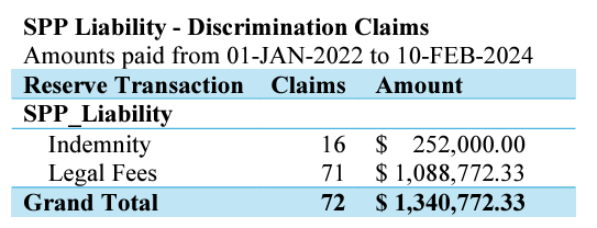
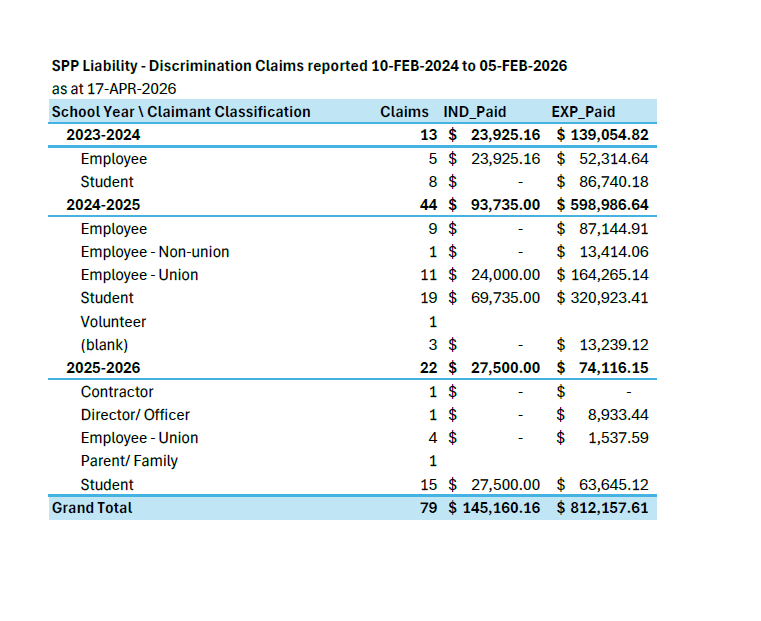
BC Human Rights Tribunal – creates case law that sets the foundation and the framework with how the school needs to function, or face the consequences. Human rights complaints can be like a car crash for a school district. Depends on the type of complaint, the complexity, the fault of staff, and how far you take them through the process. They can incur direct and indirect costs. Legal fees are expensive. Their insurance will go up. There may be casualties (staff may leave or be forced to leave). There may be injuries (staff may experience health, emotional, mental, or financial harm). The district needs to deal with the aftermath.

When I started filing complaints, I found it to be so incredibly stressful, but at the same time found it oddly comforting. It gave me hope. It saved my sanity. Took the edge off. Gave me something to focus on. Somebody else needed to know what I knew.

It came down to this:

I will never prioritize the needs of adults with resources over a trapped child experiencing harm who has no escape, and can’t do anything but endure.

Not filing a complaint on an adult who is a paid professional because you don’t want to be the one to make them feel uncomfortable feelings, meanwhile your child is experiencing hell, doesn’t make sense to me. Sure, it doesn’t feel great, but I am not keeping silent and upholding up this system so you can feel comforted in your safe predictable environment. You want to shove this under the rug without getting a scratch. Ummm no!

This is the protest. When we give them all the chances in the world to make this right and they still don’t…this is the only power we have to try and fix things.

What really gets me is that if they feel like they can get away this shit, they will keep on doing it. That. I can’t handle.

Schools can be a little too good at prioritizing their own liability needs.

So when should we file?

I absolutely do suggest you give the school a chance to resolve this with you before you start filing complaints. It truly will be better for you and your child to get a quick resolution. Climb the ladder and go above the principal. Contact the district administrators. These complaints systems are SLOW.

However….some of things that people tell me… and what I know as well…. I mean… come on districts…. are you seriously not expecting a reaction? We aren’t looking for the power struggle. We aren’t.

I have never met a group of people so hell bent on shooting themselves in the foot, than I have with school administrators. Well.. some of them.

The people who are really good at their jobs are people who are focused on communicating and solutions. These are the people we love. These are the people the next generation needs.

The next generation also need advocates. Willing to protest.

From a systemic perspective. We need the risk takers. The wild ones ready to plow new paths that seem completely illogical. We need the quieter, relationship focused advocates building inch by inch. We need the backstage advocates with the networks and unknown conversations. Swaying power every so secretly.

These external complaint systems are far from perfect. They are also all we have. If we all just stopped engaging with them until they were perfect… we would be in serious trouble. The education system would truly see us all as door mats. Buzzy mosquitoes to flick off.

If you do choose to file a complaint. Please do your research. Each is a silo. Different legislation. Different outcome options and different amounts of power. You have options.

If filing a complaint is something you don’t want to do. You still have options. It is not all or nothing. Advocacy still continues. Persistently. Consistently.

Trust in your ability to know yourself. You will find the path that you want to take. The one that matches your advocacy style. All is good. Everyone is needed and all of the different styles. We balance each other out. This is a marathon. It’s a team sport. We train individually, but we run together.

Peace.

Using AI While you Navigate the BC Human Rights Tribunal

You need to be VERY careful. The respondents could apply for costs against you and you may need to pay. AI can generate fake cases and this will harm you, not help you. (You may want to check to see if the lawyers are giving you fake cases. It has happened and lawyers have gotten into a lot of trouble over it.)

This case was posted just last week, Thursday January 15th, 2026. If you are interested in the case itself, you can click on the case link below and give it a read. However, I have pulled some key paragraphs regarding AI use.

RR v. Fraser Health Authority and others (No.3), 2025 BCHRT 287

[223]       The use of AI tools by parties to assist in the presentation of their cases has increased dramatically over the past several years. This has yielded both positive and negative consequences. On the positive side, people who are self-represented before the Tribunal may have better access to information about legal tests and precedents, and how their specific situation may have been handled by the Tribunal in the past. On the negative side, it has become widely recognised that AI tools frequently generate false information, including fake cases, which can appear to be legitimate.  

[224]       Recently, the Tribunal has cautioned parties about the responsible and appropriate use of AI tools in the Tribunal’s process. In Duarte v. City of Richmond, 2024 BCHRT 347, the Tribunal stated that parties appearing before the Tribunal must carefully assess the information that AI tools produce before using such information in the Tribunal process, and that deliberate attempts to mislead the Tribunal, or even careless submission of fabricated information, can form the basis for an award of costs under s. 37(4) of the Code. The Tribunal emphasised that the integrity of the Tribunal’s process, and the justice system more broadly, requires parties to exercise diligence in ensuring that their engagement with artificial intelligence does not supersede their own judgement and credibility: at para 53.

[225]       Similarly, the BC Court of Appeal has recently held that although parties may use AI tools to assist them in the Court’s process, “like any litigation aid, the human behind the tool remains responsible for what comes before the Court”: Wu v. Murray, 2025 BCCA 365, at para. 14.

[226]       In the present case, I do not believe RR purposely attempted to mislead the Tribunal or the Respondents. Further, the Respondents have not alleged that RR has breached any Tribunal rule, order, or policy. The Tribunal does not yet have a published policy regarding the use of AI tools in its process, or information cautioning parties about its use. Although the Tribunal has published one decision that talks about the improper use of AI tools in closing submissions, I do not expect that RR, as a self-represented person without legal training, would have known about that decision.

[227]       Further, although RR included numerous fake cases in her submissions, and although the Tribunal and the Respondents were required to expend resources to establish that the cases were not valid, it cannot be said that either the Respondents, or the complaint resolution process more generally, were significantly prejudiced. In the present situation, it was RR who was most prejudiced by her use of the fake cases. This is because the Tribunal could not rely on the majority of the legal propositions she cited, or the factual contexts from the fake cases that she said resembled the context in her own complaint.

[228]       Ultimately, in these circumstances, I do not find that RR’s inclusion of the fake cases amounts to improper conduct warranting an order of costs. As such, I decline to exercise my discretion to award costs against RR for improper conduct. These reasons should not be taken to condone the inclusion of fake cases with a party’s submissions or suggest that in other cases an order for costs would not be appropriate.

*******

For a blog on financial risk navigating the BC HRT read: Is there a financial risk to filing a human rights complaint?

Education Assistant – Employment Human Rights Complaint

I just want to preface this with a message before I even dive into this. Tribunal decisions do not reflect all of the information or the full story. They are not tell all novels. They only highlight the information that they need to legally analyze the discrimination decision. There could be all sorts of stuff that you will never publicly read about.

I don’t typically post decisions regarding education staff as my focus is for parents/caregivers and students. I did write a blog that I think is helpful for education staff filing human rights complaints. However, this decision is unique in that I don’t often see an Education Assistant (EA) human rights complaints in BC. This complaint raises some interesting issues and demonstrates some important procedural fairness accommodations that I think is important for parents/caregivers and students to know about who are considering navigating or currently navigating.

What started this complaint was her disagreement over an Autistic student being excluded from school. It then snowballed into harassment and bullying allegations from Ms. Broe to other staff and staff filed allegations against her.

[14]           Ms. Gowe worked with Ms. Broe at the Secondary School from 2010 to 2018. Ms. Gowe stated that Ms. Broe would often come to her with concerns, and she would try to provide clarification, support, and direction to Ms. Broe about her role. However, Ms. Gowe testified that around the fall of 2017, she became concerned that Ms. Broe was being overly critical of other staff and not staying within the scope of her role as a CEA. Ms. Gowe was also approached by several staff who reported concerns about Ms. Broe’s behaviour. Ms. Gowe began documenting these concerns in case Ms. Broe’s behaviour escalated further.

[15]           From Ms. Broe’s perspective, it was her job to do what she thought was right for the students even if this was perceived as her challenging the decisions of other staff. One example from this period was discussed by several witnesses at the hearing. Ms. Broe testified extensively about a decision made without her input to temporarily remove a student with Autism she worked with from the Secondary School. Ms. Broe felt this was the wrong decision and she needed to take action to return the student to school. Ms. Broe first brought her concerns to a special education teacher, who subsequently approached Ms. Gowe with her own concerns that Ms. Broe was being overly critical of another staff member involved in the decision. Ms. Broe then went to the school Principal and subsequently, feeling that someone had lied to the Principal about the student, reached out to the Director of Support Services at the District, Susan Thomson. Ms. Thomson met with Ms. Broe to listen to her concerns but informed her that the decision had been made by a “darn good team” and she needed to move on. Ms. Gowe testified that she was concerned that Ms. Broe’s actions around this issue were causing stress to other staff and indicated that Ms. Broe was “crossing boundaries” and unable to let things go.

I am aware that if you are an EA and you are advocating on behalf of a student, you can end up putting your head on the chopping block. Even though on paper, documents say that advocating is part of your job, “4.4 Advocate for the protection of the legal and human rights of students and their families“. In reality, that isn’t necessarily so. This is true for teachers as well. A teacher who blogs The Canary Collective wrote about her experience. Her first line in her first blogI never imagined that advocating for students would put my career at risk.” She says she was disciplined for advocating.

Regarding this case with the education assistant, I am not going to post all of the details of this case. You can read through it all. It sounds like it’s been a difficult experience for many people involved, including Ms. Broe. This is the third posted public decision in this case. You can find the other two on CanLii.

Broe v. The Board of Education of School District No. 67 (Okanagan Skaha) (No.3), 2025 BCHRT 295

I do want to highlight some hearing procedural items that occurred that I think is important be aware of, to know what is possible.

Flexibility Procedural Fairness


[49]           Ms. Broe worked hard to represent herself in this complaint. I gave her significant latitude with her testimony, which took place over seven days. Similarly, she was allowed to extensively cross-examine the District’s witnesses, including a full day with Mr. Corday and more than a day with Mr. Burgoyne.

[50]           This was a difficult hearing for Ms. Broe and some of the witnesses involved. One witness expressed that it felt like Ms. Broe was using the Tribunal process to get “revenge” for the events in the complaint. It was clear that revisiting these events was stressful for Ms. Broe, and her emotions were often heightened. Although she had the opportunity to ask questions, and receive answers, from individuals involved in the events leading to this complaint, she expressed that some of the evidence was hurtful and caused her to question her sense of self.

[51]           We took additional breaks as necessary. Ms. Broe was also offered the option of having a support person sit with her throughout the hearing, however the person she identified was not available. Having expressed that seeing Mr. Corday in the virtual hearing room was a trigger for Ms. Broe, he agreed to attend the hearing with his camera turned off, with the exception of when he was providing his testimony.

[52]           Ms. Broe was also given significant latitude with respect to her documentary evidence. Before the hearing, I held a case conference with the parties where we discussed, among other things, how to admit documents at the hearing. I explained that any documents previously submitted to the Tribunal in preliminary applications would not form part of the hearing record, and if a party wanted to introduce a document at the hearing, they had to provide it as part of their book of documents. I confirmed these instructions in writing. The parties agreed to prepare a joint book of documents, which they submitted to the Tribunal a few days before the hearing began.

[53]           On the first day of the hearing, however, Ms. Broe sought to rely on documents that were not included in the joint book of documents and which she had not provided to the Tribunal for the purpose of the hearing. I reminded Ms. Broe of the instructions I had provided and directed her to review all her documents after we had adjourned for the day, submit them to the Tribunal and the District, and we would address any procedural fairness issues the following day. Ms. Broe agreed to follow these instructions.

[54]           The next morning however, she had not provided the documents and expressed that she had not slept and was confused about the process. We revisited the document issue the morning of the third day of hearing, as Ms. Broe again wished to rely on the documents she had not provided according to my instructions. The District’s legal counsel offered a solution: she would send the Tribunal a file containing all the documents Ms. Broe had disclosed to the District in advance of the hearing and would not object to these documents being admitted on the basis of inadequate notice. This allowed the Tribunal to access Ms. Broe’s documents, one by one, as Ms. Broe sought to introduce them. While there were still delays caused by this approach, the District’s cooperation in problem-solving allowed Ms. Broe to present the evidence that she had previously prepared in a manner that made sense to her. I thank legal counsel for her efforts in this regard.

*******

The tribunal is very aware for people filing complaints, this is not an easy process, and many people navigating the process have mental disabilities. It’s stressful and emotional. It is a legal process and by how our legal system is designed, it is adversarial. Most people don’t have lawyers or training in any legal education. Some people are incarcerated while they are navigating this process. For the tribunal, it is their role to make this process as fair as possible for both sides.

If you need something, don’t assume you will get a no. Always ask! You never know what is possible.

The final decision was that her complaint was dismissed. She didn’t meet the legal test for discrimination. You have the burden of proof to prove you were discriminated against, and then if you do that then the respondents need to try to prove that it was justifiable to the point of undue hardship.

*****

[57]           For the reasons that follow, I find that Ms. Broe has not met her burden of proving the elements of her case.

******

Tribunal members who write decisions will sometimes acknowledge that people have been harmed by the events they are describing in their cases. In this case, they did this as well. Which I always appreciate when they do that. I hope that acknowledgement and validation is helpful for people. Human rights decisions also state that negative experiences are not necessarily discrimination. This is a legal test about a very specific act. Discrimination. Not a moral test or honesty test about harmful or unfair events.

In this education case: X by Y v. Board of Education of School District No. Z, 2024 BCHRT 72

[110] ….I accept that these incidents which X relayed to Y were upsetting to X. I appreciate that the interactions may have fed into X’s general feelings of unease at school, but the fact alone that these events may have happened is not enough, in itself, to establish that X’s disability factored into them. Not all negative experiences are discrimination. Even accepting that these incidents occurred, I did not hear evidence that could establish, on a balance of probabilities, that X’s disability was a factor in the conduct of the adults involved in these interactions.

*******

As always, we learn from these decisions. The more information we have, the more we can make informed decisions. Sometimes filing a human rights complaint is incredibly helpful and sometimes it is not the best avenue to heal and process stressful events. Also, tribunal members can also make wrong decisions. I think for a lot of people filing complaints, they just can’t tolerate the injustice or unfairness of what they feel has happened, and they are compelled to do something about it. I hope for everyone involved in this case, they are able to heal, find some peace, and move on.

I wonder what happened to the student who was being excluded…